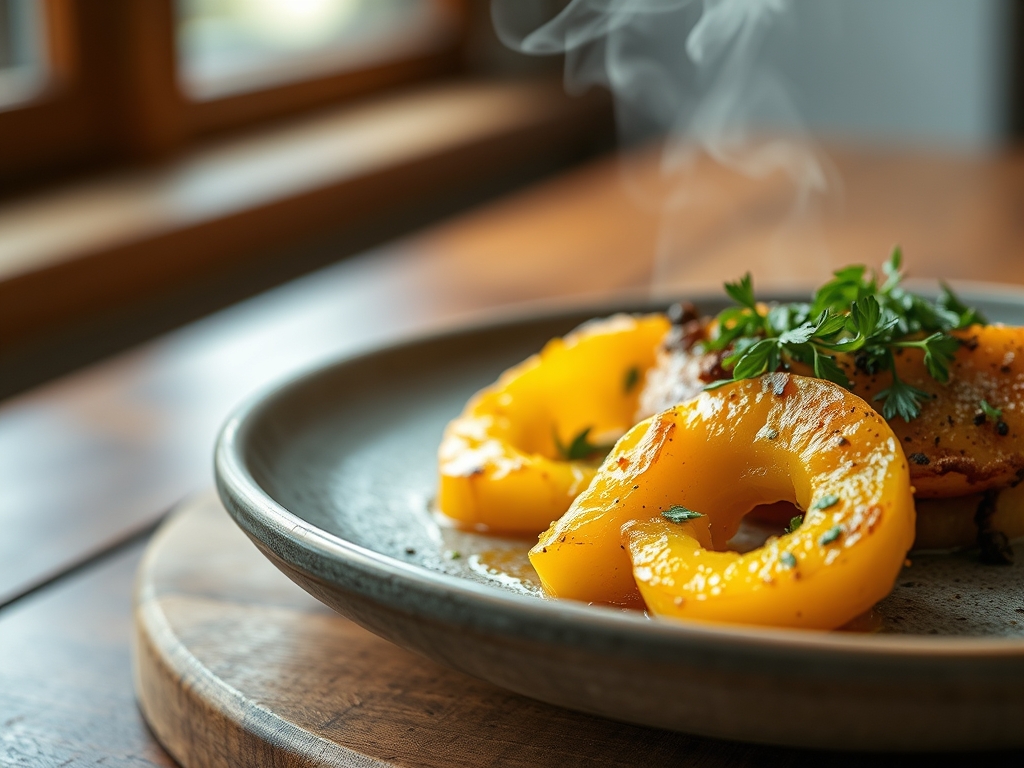
Picture the steam rising in a fragrant, golden plume as you slice through a butter-soft layer of roasted kabocha and Yukon Golds. There is a specific, primal comfort found in squash potato recipes that other vegetable pairings simply cannot replicate. It is the marriage of earthy, starch-heavy tubers with the floral, beta-carotene-rich sweetness of autumn gourds. Whether you are folding them into a silky mash or roasting them until the edges shatter like glass, these seven blends represent the pinnacle of nutrient-dense comfort food. We are not just making dinner; we are engineering the perfect bite.
The secret to mastering squash potato recipes lies in understanding the structural differences between these two botanical cousins. Potatoes provide the amylose and amylopectin starches necessary for a creamy mouthfeel, while squash offers a high water content and complex sugars that caramelize at lower temperatures. When you combine them, you create a dish that is nutritionally superior to a standard side of spuds, lowering the overall glycemic load while amping up the Vitamin A and C content. It is smart, it is soulful, and it is scientifically sound.
The Gathers:
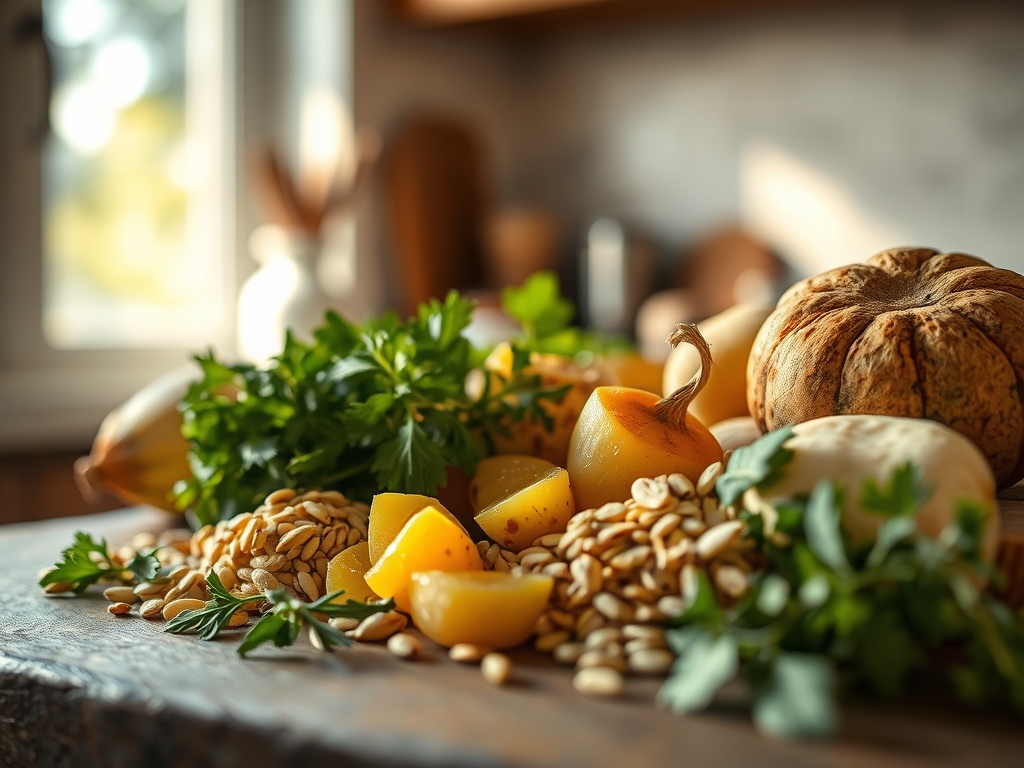
To begin our culinary exploration, you must assemble your mise-en-place with precision. Start with your starches. For these blends, I recommend a 1:1 ratio of waxy potatoes like Red Bliss or Yukon Gold to dense squashes such as Butternut, Honeynut, or Red Kuri. Waxy potatoes contain less starch than Russets, meaning they hold their cellular structure better during a long roast or boil. Use a digital scale to ensure your ratios are exact; precision here prevents one flavor from overshadowing the other.
Your aromatic profile should include fresh woody herbs like rosemary and sage, which contain fat-soluble volatile oils that bloom when exposed to heat. You will also need a high-quality fat source, such as grass-fed butter or cold-pressed avocado oil, to render the flavors together. For a piquant finish, keep a microplane handy to zest fresh lemon or grate aged Pecorino Romano.
Smart Substitutions:
If you are looking to lower the carbohydrate count further, swap the potato for celery root (celeriac). It mimics the texture of a boiled potato but offers a nutty, herbal undertone. For the squash, if butternut is unavailable, sweet potatoes are a viable alternative, though they lack the slightly viscous quality of true gourds. If you need a vegan fat source, refined coconut oil provides the necessary saturated fat for a luxurious mouthfeel without an overpowering tropical scent.
The Clock
Efficiency in the kitchen is about mastering the "Chef's Flow." Most squash potato recipes require approximately 15 minutes of active prep and 30 to 45 minutes of thermal application. The goal is to synchronize the softening of the potato with the caramelization of the squash.
Start by peeling and dicing your denser vegetables first. A bench scraper is your best friend here for clearing your board quickly. If you are roasting, preheat your heavy-bottomed skillet or sheet pan in the oven. This creates an immediate sear upon contact, reducing the total time the vegetables spend losing moisture to the air. While the vegetables cook, use that "dead time" to infuse your oils or prepare a cold garnish. This ensures that the moment the timer dings, you are ready to plate.
The Masterclass
1. The Precision Dice
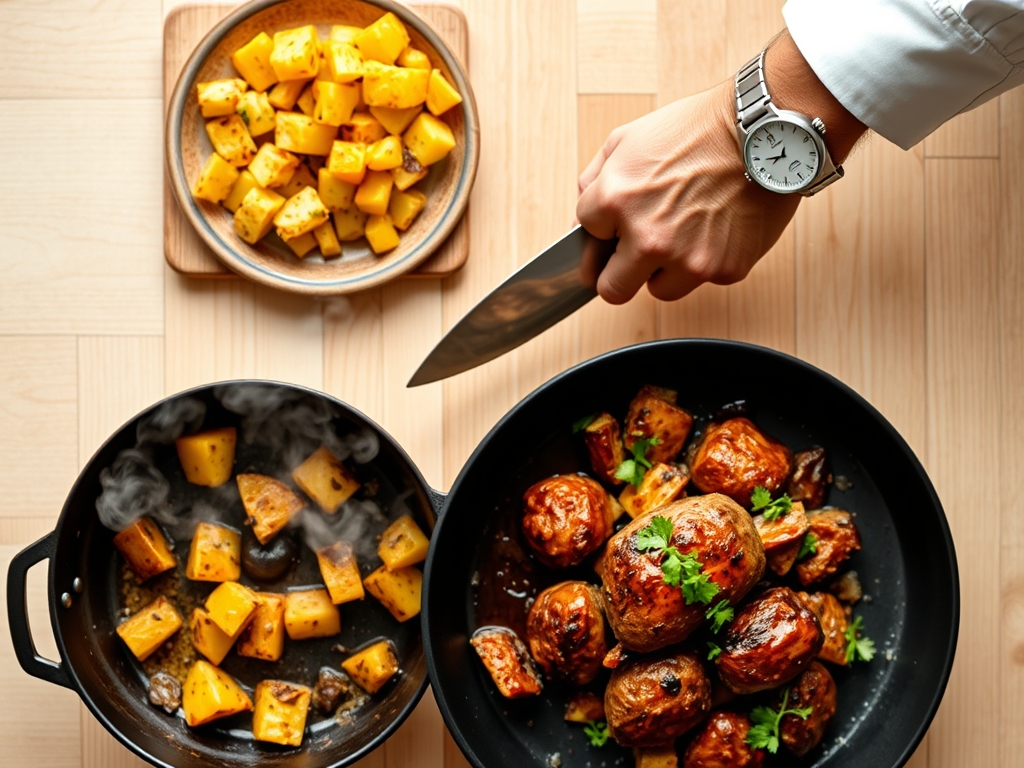
Uniformity is the soul of even cooking. Use a sharp chef knife to cut both the squash and potatoes into consistent 1-inch cubes. Note the texture in the step-by-step photos above; the clean edges allow for maximum surface area contact with the roasting pan.
Pro Tip: This prevents enzymatic browning. When you cut a potato, polyphenol oxidase reacts with oxygen. Keeping your diced potatoes in a bowl of cold water until the moment they hit the heat stops this oxidation and removes excess surface starch for a crispier finish.
2. The Par-Blanch Technique
For recipes involving a mash or a gratin, par-blanch your potato cubes in salted water for five minutes before adding the squash. Squash softens faster due to its higher water-to-fiber ratio.
Pro Tip: This stage utilizes starch gelatinization. By pre-cooking the potato slightly, you ensure the internal granules swell and soften at the same rate as the squash, preventing a "lumpy" texture in the final blend.
3. The Maillard Sear
If roasting, toss your vegetables in a saucier with oil and salt before spreading them onto a preheated tray. Do not crowd the pan; airflow is the difference between roasting and steaming.
Pro Tip: This triggers the Maillard reaction, a chemical reaction between amino acids and reducing sugars that creates the brown, savory crust. If you crowd the pan, the escaping steam lowers the surface temperature, and you lose that golden flavor profile.
4. The Emulsification Fold
When mashing your blend, add your fats (butter or cream) while the vegetables are piping hot. Use a silicone spatula to fold the ingredients rather than whipping them.
Pro Tip: This protects the molecular structure. Over-working potatoes releases too much starch, turning your mash into a gluey paste. Gentle folding incorporates the fat into the vegetable fibers without shearing the starch molecules.
5. The Thermal Rest
Once removed from the heat, allow your squash potato recipes to sit for three minutes before serving. This allows the internal moisture to redistribute.
Pro Tip: This accounts for thermal carryover. The internal temperature will continue to rise by 5 to 10 degrees after removal from the oven. Resting ensures the center of the potato is fully tender without overcooking the delicate squash exterior.
The Deep Dive
From a macro perspective, these blends are a powerhouse. You are looking at a high-fiber, low-fat side dish that provides sustained energy through complex carbohydrates. A typical serving contains roughly 150 calories, 30g of carbs, and a massive dose of potassium, which helps regulate fluid balance and muscle contractions.
For dietary swaps, those on a Keto path should skew the ratio heavily toward squash (specifically spaghetti squash or pumpkin) and use radishes instead of potatoes. For a Vegan version, utilize nutritional yeast to provide a cheesy, umami depth without the dairy. Gluten-Free diners can rest easy, as these whole foods are naturally devoid of gluten, provided you avoid thickeners like flour in your sauces.
The Fix-It: Common Pitfalls
- The Sogginess: If your roast is limp, it is likely due to excess moisture. Fix: Salt the squash 10 minutes before cooking and pat dry with a paper towel to draw out surface water.
- The Bitter Note: Sometimes squash can have a sharp, tannic finish. Fix: Add a teaspoon of maple syrup or honey to balance the pH and enhance the natural sugars.
- The Separation: If your mash looks broken or oily, the emulsion has failed. Fix: Add a tablespoon of hot starchy cooking water and whisk vigorously to re-bind the fats and fibers.
Meal Prep Science:
To maintain "day-one" quality, store your blends in airtight glass containers. When reheating, avoid the microwave if possible. Instead, use a heavy-bottomed skillet with a splash of water and a lid. This creates a steam-saute effect that re-hydrates the squash without making the potato skins rubbery.
The Wrap-Up
Mastering squash potato recipes is like learning a new dialect of comfort. It is about the balance of textures, the science of starch, and the joy of a vibrant, colorful plate. By respecting the chemical properties of your ingredients and using the right tools, you transform humble root vegetables into a gourmet experience. Now, grab your tongs, fire up the oven, and let the aroma of roasting gourds fill your home. Your kitchen is your laboratory; make it delicious.
The Kitchen Table
Can I use frozen squash for these recipes?
Yes, but you must roast them from frozen at a higher temperature. Frozen squash has compromised cell walls, which release water quickly. High heat evaporates this moisture immediately, preventing a mushy texture and ensuring proper caramelization.
What is the best potato for a squash mash?
Yukon Gold is the undisputed champion. Its natural buttery flavor and medium starch content create a creamy, cohesive texture when blended with squash. It provides enough structure to hold the mash together without becoming gummy or thin.
How do I prevent squash from burning before potatoes cook?
Cut your potatoes into smaller cubes than the squash. Since potatoes are denser and take longer to reach thermal equilibrium, the smaller size ensures they finish cooking at the exact moment the squash reaches its peak golden-brown state.
Is it necessary to peel the squash?
For Butternut or Kabocha, peeling is recommended for a smooth texture. However, for Delicata or Red Kuri squash, the skin is thin and edible. Leaving the skin on adds fiber and a beautiful visual contrast to your squash potato recipes.