
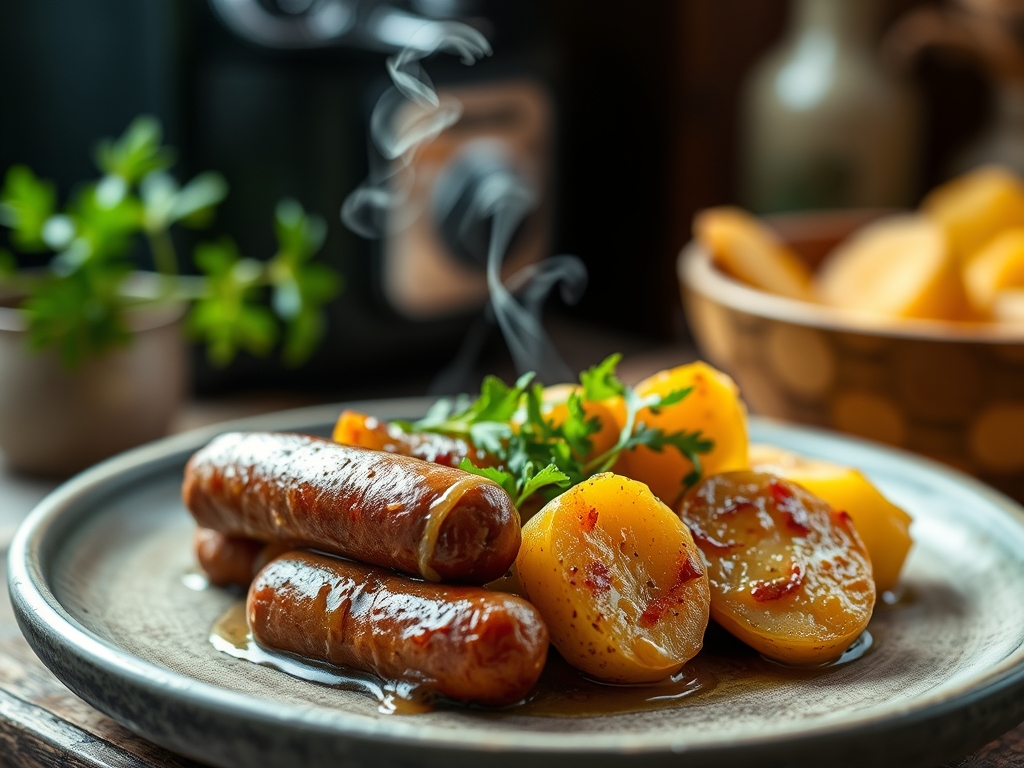
Imagine the smell of smoked paprika and rendered pork fat swirling through your kitchen at three in the afternoon. It is that specific, heavy aroma that promises a night of zero dishes and maximum comfort. When you master slow cooker sausage and potato recipes, you are not just throwing things into a ceramic pot; you are managing a complex chemical environment where starch meets collagen. There is a certain magic in the way a waxy potato absorbs the piquant drippings of a seared andouille or a mild bratwurst. It is the ultimate culinary hug for the busy professional who still wants to eat like a gourmand.
We are diving deep into ten variations of this classic pairing today. Whether you crave a creamy Zuppa Toscana inspired broth or a hearty, dry-rubbed Cajun medley, the fundamentals remain the same. We are looking for that perfect intersection of a tender, non-mushy tuber and a sausage that has released its oils without becoming rubbery. Grab your favorite heavy-bottomed skillet and let us get to work on the prep.
The Gathers:
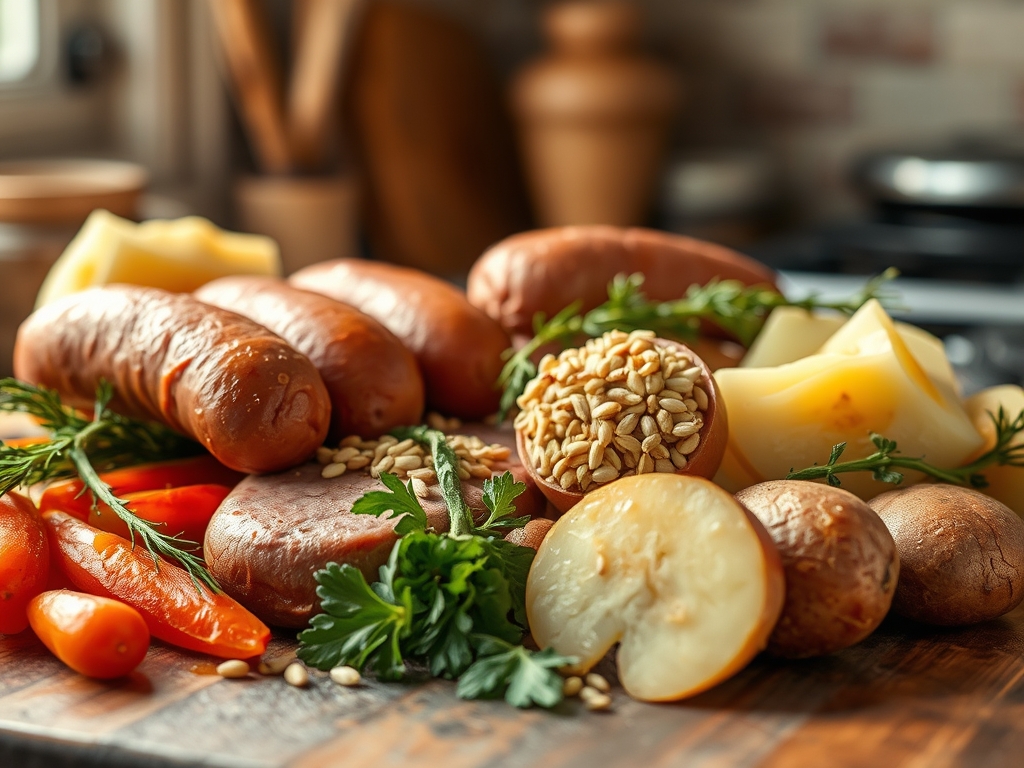
To execute these slow cooker sausage and potato recipes with precision, your mise-en-place must be intentional. Start with your potatoes. I recommend Yukon Golds for their high starch-to-moisture ratio; they hold their shape during an eight-hour braise while providing a buttery mouthfeel. If you use Red Bliss, keep the skins on to preserve the structural integrity of the pectin. For the protein, choose high-quality links with natural casings. The casing acts as a pressurized vessel that keeps the interior moist while the exterior undergoes a gentle heat soak.
Smart Substitutions:
If you are looking to lighten the caloric density, swap traditional pork sausage for a high-quality chicken apple or turkey kielbasa. Just be aware that leaner meats lack the fat required to emulsify into a thick sauce, so you might need a splash of heavy cream or a knob of grass-fed butter at the end. For a low-carb twist, sub out half the potatoes for cauliflower florets or radishes. When slow-cooked, radishes lose their peppery bite and take on a texture remarkably similar to a boiled red potato. Use a digital scale to ensure your ratios are consistent; aim for a 1:1 ratio of meat to starch for the most balanced bite.
The Clock
Efficiency in the kitchen is about the Chef's Flow. You should spend no more than 20 minutes on active prep. This includes dicing your aromatics with a sharp chef's knife and using a bench scraper to transfer them to your slow cooker. The cooking window is flexible. On a low setting, these meals thrive over six to eight hours. If you are in a rush, four hours on high will suffice, though the collagen in the sausage casings will not be quite as supple. Always factor in a ten-minute "resting" period after you turn the machine off. This allows the liquid to stop bubbling and the starches to settle, resulting in a more viscous and cohesive sauce.
The Masterclass
1. The Maillard Sear
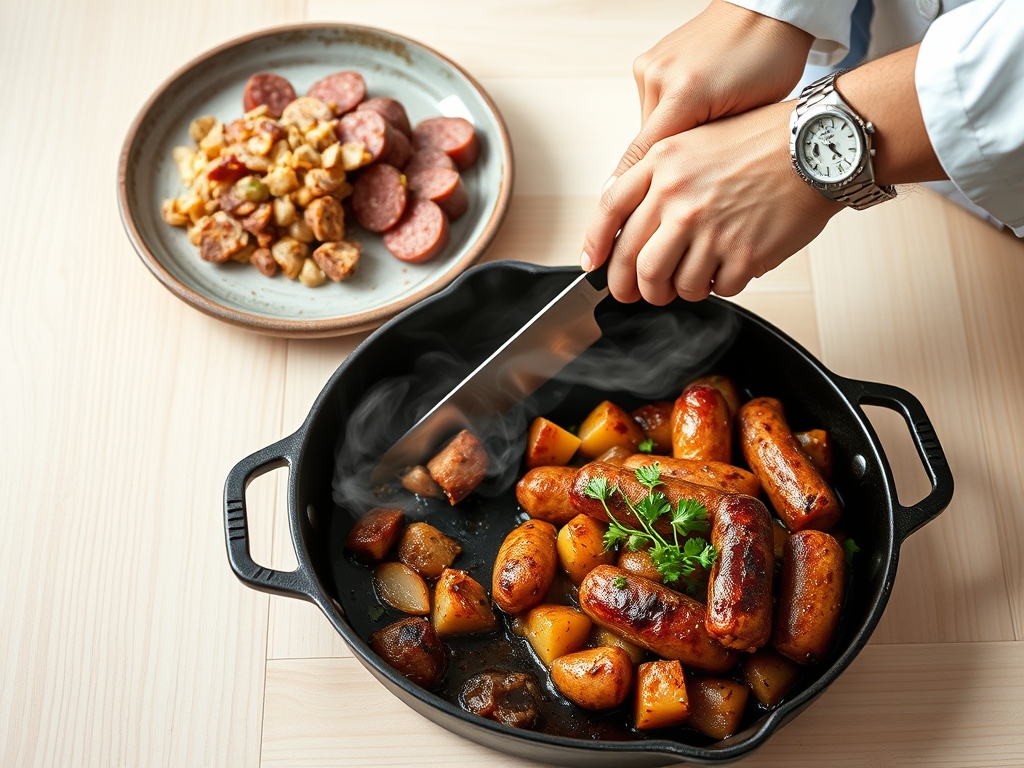
Before anything touches the slow cooker, heat a heavy-bottomed skillet over medium-high heat. Brown your sliced sausages until a deep, caramelized crust forms.
Pro Tip: This is the Maillard reaction. By browning the meat first, you create complex flavor compounds that a slow cooker cannot produce on its own due to the presence of steam.
2. Deglaze and Infuse
Once the meat is browned, remove it and add a splash of white wine or chicken stock to the hot pan. Use a wooden spoon to scrape up the brown bits (the fond).
Pro Tip: This step ensures you do not lose any "liquid gold." Deglazing incorporates those concentrated proteins back into the base of your stew for a deeper umami profile.
3. Layering the Aromatics
Place your densest vegetables, like carrots and potatoes, at the very bottom of the ceramic insert. Top them with your seared sausage and then your onions and garlic.
Pro Tip: The bottom of the slow cooker is the hottest point. Placing root vegetables here ensures they soften completely while the delicate aromatics on top infuse the dish without burning.
4. The Liquid Ratio
Add your liquid component, but do not submerge the ingredients. Use just enough broth or crushed tomatoes to reach the halfway mark of your solids.
Pro Tip: Slow cookers are closed systems with zero evaporation. If you add too much liquid, you will end up with a watery soup instead of a rich, concentrated ragu.
5. The Finishing Acid
Five minutes before serving, grate fresh lemon zest using a microplane or stir in a teaspoon of apple cider vinegar.
Pro Tip: Heat dulls flavors over time. Adding a bright acid at the end "wakes up" the palate and cuts through the heavy fats of the sausage.
The Deep Dive
From a macro perspective, slow cooker sausage and potato recipes are powerhouses. You get complex carbohydrates for sustained energy and high-quality protein for satiety. To make this Keto-friendly, swap potatoes for turnips and use a sugar-free smoked sausage. For a Vegan version, utilize a soy-based chorizo and vegetable bouillon; just be sure to add a tablespoon of olive oil to mimic the fat rendered from traditional pork.
The Fix-It:
- Too Watery? Whisk a tablespoon of cornstarch with cold water to create a slurry. Stir it in and cook on high for 15 minutes to thicken the sauce.
- Potatoes are Crunchy? This usually happens if you add acidic ingredients like tomatoes too early. Acid prevents pectin from breaking down. Next time, add tomatoes during the final two hours.
- Bland Flavor? You likely skipped the searing step. Fix it now by stirring in a spoonful of bouillon base or a dash of Worcestershire sauce.
Meal Prep Science:
When reheating, do not use the microwave on high power. The intense radiation can cause the fat in the sausage to "pop" and dry out the potatoes. Instead, use a saucier on the stovetop over low heat. Add a tablespoon of water to create steam, which will re-hydrate the starches and return the dish to its "day-one" glory.
The Wrap-Up
There is nothing quite like the satisfaction of a meal that works for you while you are away. These slow cooker sausage and potato recipes are more than just fuel; they are a masterclass in flavor layering and thermal management. By focusing on the sear, the starch selection, and the final acidic pop, you transform a humble weeknight dinner into a restaurant-quality experience. Now, go grab your tongs and start searing; your future self will thank you when you walk through the door tonight.
The Kitchen Table
Can I put frozen sausage in the slow cooker?
No, always thaw sausage first. Starting from frozen keeps the meat in the "danger zone" temperature range for too long, risking bacterial growth. Thawing ensures even heat distribution and allows for a proper Maillard sear before slow cooking.
Which potato holds up best for 8 hours?
Yukon Gold or Red Bliss potatoes are superior for long braises. Their waxy texture and high pectin content allow them to maintain their shape without disintegrating into a grainy mash, unlike starchy Russet potatoes which often fall apart.
How do I prevent my sausage from getting rubbery?
Avoid overcooking on the "High" setting for too long. If you must cook for eight hours, use the "Low" setting. This allows the fat to render slowly and the connective tissues to soften without tightening the protein fibers.
Can I add leafy greens like spinach?
Yes, but only at the very end. Stir in fresh spinach or kale during the last five minutes of the "Warm" cycle. The residual heat will wilt the greens perfectly without turning them into a gray, overcooked mush.