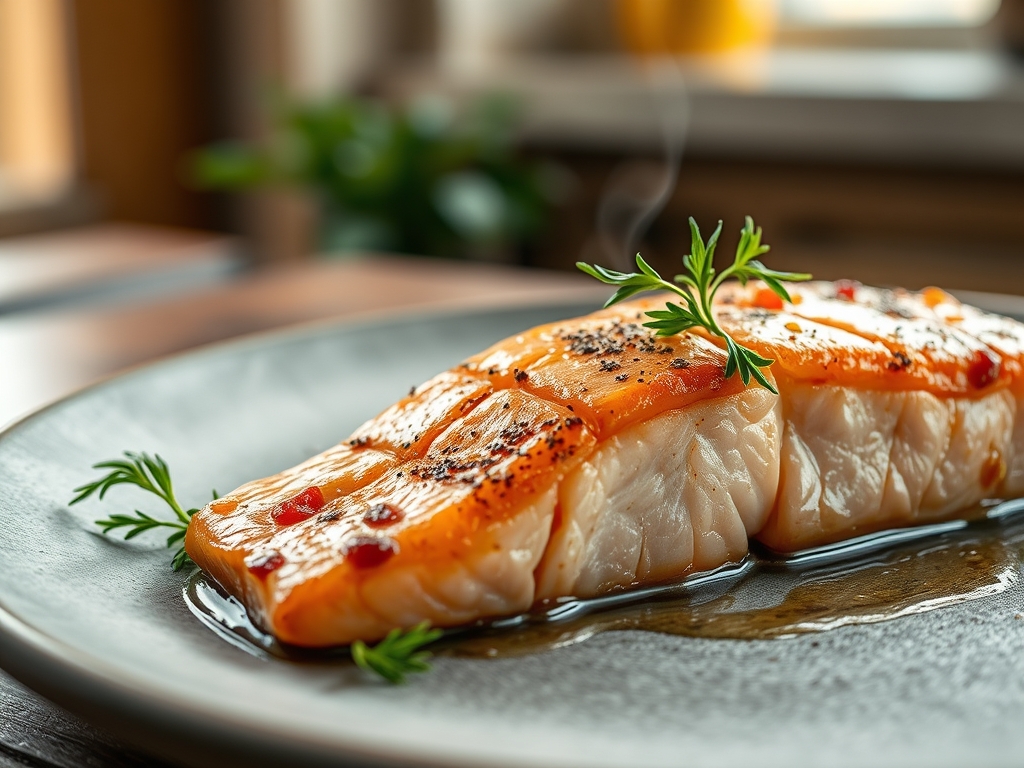
Picture a crisp April morning where the air smells like wet stone and new clover. You are standing in your kitchen with a side of fish so vibrant it looks like a sunrise. We are moving away from the heavy, butter-laden bakes of winter. It is time for spring salmon recipes that celebrate the snap of a pea and the zing of a lemon. This is about more than just eating; it is about capturing a season on a plate.
The shift in temperature calls for a lighter touch. We are looking for textures that pop and flavors that dance. Salmon is the perfect canvas for this because its high fat content creates a lush mouthfeel that balances the sharp acidity of spring greens. Whether you are searing a fillet to get that glass-shattering skin or gently poaching it in a bath of aromatic herbs, you are about to master the art of the seasonal pivot. Let us get your apron on and your pans hot.
The Gathers:
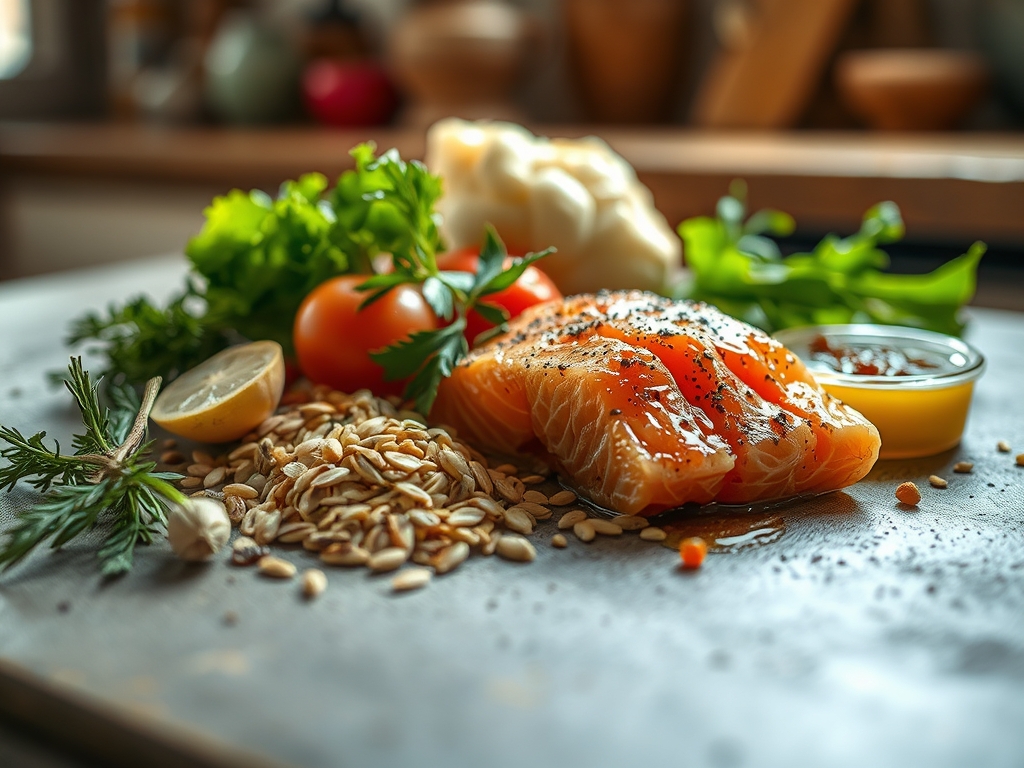
To execute these spring salmon recipes with precision, your mise-en-place must be impeccable. We start with the star: center-cut Atlantic or King salmon. Look for flesh that is firm to the touch with no "gapping," which indicates the muscle fibers are still tightly bound. You will need a digital scale to ensure your portions are a consistent 6 ounces; this is the secret to uniform cooking times across the board.
Next, gather your aromatics. We are using ramps (if you can find them) or spring onions to provide a piquant base. You will need a microplane for zesting Meyer lemons and grating fresh ginger into a fine paste. For the greens, think English peas, shaved asparagus, and radishes. These vegetables contain high levels of chlorophyll and water, so they require minimal heat to stay vibrant.
Smart Substitutions:
If you cannot find ramps, use a mix of scallions and one clove of grated garlic to mimic that wild, pungent flavor. For a dairy-free version of our creamy dill sauce, swap heavy cream for full-fat coconut milk or a viscous cashew cream. If you are avoiding nightshades, replace black pepper with a pinch of white pepper or a dash of horseradish for that necessary heat.
The Clock
Efficiency in the kitchen is all about the Chef's Flow. This is the sequence of operations that ensures nothing sits getting cold while you scramble to finish a garnish. For these six dishes, expect a total active prep time of 25 minutes and a cook time ranging from 8 to 15 minutes depending on the method.
The flow begins with the "Cold Prep." Wash and slice all your vegetables using a bench scraper to move them into neat piles. Next is the "Protein Prep." Pat your salmon bone-dry with paper towels; moisture is the enemy of the Maillard reaction. Finally, the "Active Fire" phase. By the time the fish hits the heavy-bottomed skillet, your table should already be set. This prevents the dreaded "carryover overcook" where the fish continues to toughen while you look for a fork.
The Masterclass
1. The Perfect Sear
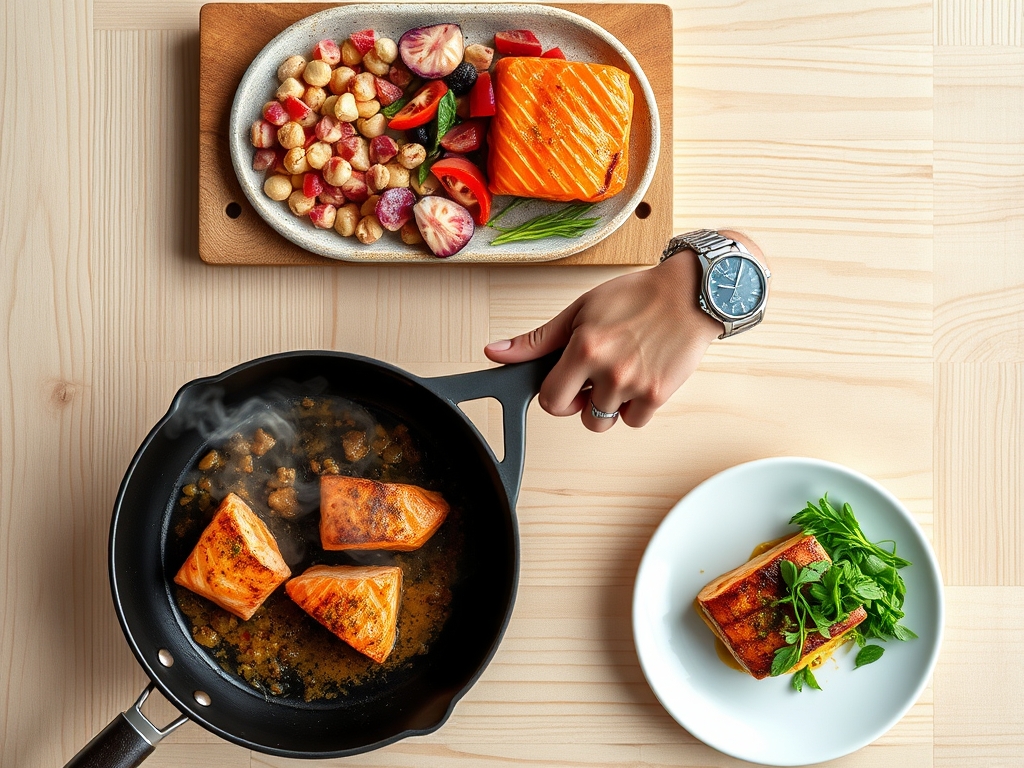
Start by heating your skillet over medium-high heat until the oil shimmers. Place the salmon skin-side down and press firmly with a flexible spatula for 10 seconds. This prevents the skin from curling as the proteins contract.
Pro Tip: This technique relies on thermal conduction. By pressing the fish, you ensure maximum surface contact, which leads to even enzymatic browning and a crisp, parchment-like skin texture.
2. The Herb Infusion
Once you flip the fish, add a knob of cold butter and a bundle of fresh thyme to the pan. Use a large spoon to infuse the fat and continuously baste the flesh. This is called "arroser," and it keeps the top of the fish moist while the bottom finishes.
Pro Tip: Butter contains milk solids that undergo the Maillard reaction at a lower temperature than the fish proteins. This creates a nutty, toasted flavor profile that complements the fatty acids in the salmon.
3. The Deglaze
After removing the fish, the pan will have "fond," those delicious brown bits stuck to the bottom. Pour in a splash of dry white wine or vegetable stock to deglaze the surface. Use your tongs to scrape up every bit of flavor.
Pro Tip: The alcohol in the wine acts as a solvent, dissolving flavor compounds that are not water-soluble. This creates a more complex and layered pan sauce.
4. The Emulsion
Lower the heat and whisk in a spoonful of Dijon mustard or cold butter. You want to aerate the sauce until it becomes a glossy, stable emulsion. If it starts to separate, add a teaspoon of water and whisk vigorously.
Pro Tip: Emulsification is the process of forcing two immiscible liquids, like oil and vinegar, into a homogenous mixture. The mustard acts as a stabilizer to keep the sauce from breaking.
5. The Spring Vegetable Saute
Toss your asparagus and peas into the same pan for exactly 90 seconds. You want to render out the last of the pan juices while keeping the vegetables "al dente." The residual heat is enough to soften the cell walls without destroying the crunch.
Pro Tip: Brief heat exposure preserves the pectin in the vegetable cell walls. Overcooking causes these walls to collapse, resulting in the mushy texture we are trying to avoid.
6. The Final Rest
Plate your greens first, then nestle the salmon on top. Let the dish rest for three minutes before serving. This allows the internal juices to redistribute from the center back to the edges of the fillet.
Pro Tip: This is the "Resting Phase." During cooking, muscle fibers tighten and push moisture outward. Resting allows those fibers to relax and reabsorb the liquid, ensuring a succulent bite.
The Deep Dive
From a macro perspective, salmon is a nutritional powerhouse. A single 6-ounce serving provides roughly 34 grams of high-quality protein and is rich in Omega-3 fatty acids, which are essential for brain health. Because we are using fresh spring produce, these dishes are naturally low in carbohydrates but high in fiber.
Dietary Swaps:
For a Keto version, ensure your glaze is sugar-free and double up on the butter-based sauces. Vegan friends can swap the salmon for a thick "steak" of roasted cauliflower or firm tofu marinated in beet juice for color. For Gluten-Free diners, simply ensure your mustard and stocks are certified GF.
The Fix-It:
- The Skin is Soggy: You likely didn't pat the fish dry or the pan wasn't hot enough. Fix: Remove the fish, wipe the pan, add fresh oil, and sear the skin side again for 60 seconds.
- The Sauce Broke: The heat was too high. Fix: Remove from heat immediately and whisk in a single ice cube to rapidly lower the temperature and pull the emulsion back together.
- White Stuff on Top: This is albumin, a protein that leaches out when salmon is cooked too fast or too long. Fix: It is perfectly safe to eat, but you can hide it with a fresh herb gremolata.
Meal Prep:
When reheating salmon, the goal is to avoid the "fishy" smell caused by oxidized fats. Reheat at a low temperature (275°F) in the oven with a splash of water covered in foil. This creates a mini-steam chamber that preserves the moisture.
The Wrap-Up
Mastering spring salmon recipes is like learning a new language; once you understand the grammar of the sear and the vocabulary of the season, you can say anything. You have the tools, the science, and the seasonal inspiration to turn a simple Tuesday night into a culinary event. Remember to trust your senses. Listen for the sizzle, watch for the color change, and always, always taste as you go. Your kitchen is now a laboratory of flavor, and you are the lead scientist.
The Kitchen Table
How do I know when the salmon is done?
Use a digital thermometer to check for an internal temperature of 125°F for medium-rare. The flesh should be opaque and flake easily with a fork under light pressure.
Can I use frozen salmon for these recipes?
Yes, but thaw it completely in the refrigerator overnight. Pat it extremely dry with paper towels to remove excess moisture from the freezing process before searing.
What is the best way to store leftovers?
Store cooked salmon in an airtight container for up to two days. It is delicious served cold over a spring salad if you prefer not to reheat it.
Why does my salmon smell "fishy" after cooking?
Fresh salmon should smell like the ocean. A strong fishy odor usually indicates the fats have begun to oxidize. Always buy from a reputable fishmonger with high turnover.