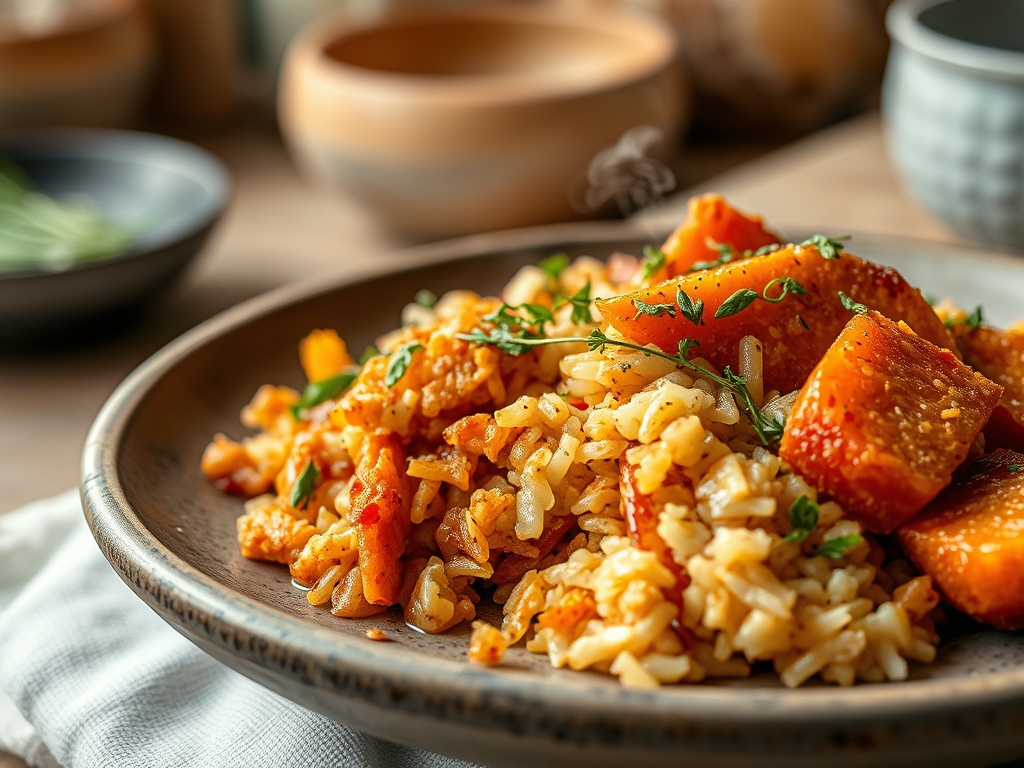
Imagine the scent of toasted jasmine grains mingling with the caramelizing sugars of a roasted garnet yam. It is a fragrance that signals pure comfort. Mastering rice and sweet potato recipes requires more than just boiling water; it is a delicate dance of starch gelatinization and the Maillard reaction that turns humble pantry staples into a complex, multi-textured masterpiece.
Whether you are craving a savory turmeric-infused pilaf or a velvety coconut milk porridge, these two ingredients are the ultimate culinary power couple. Rice provides the structural, neutral canvas, while the sweet potato offers a buttery, saccharine depth. When you combine them, you are not just making a side dish; you are creating a nutrient-dense foundation that can pivot from a zesty lime-cilantro lunch to a warm cinnamon-spiced breakfast. The magic lies in the contrast between the fluffy, individual grains of rice and the creamy, melt-in-your-mouth cubes of tuber. By understanding the molecular behavior of these starches, you can elevate your weeknight rotation into something truly sophisticated. Let us get into the grit of the grain.
The Gathers:
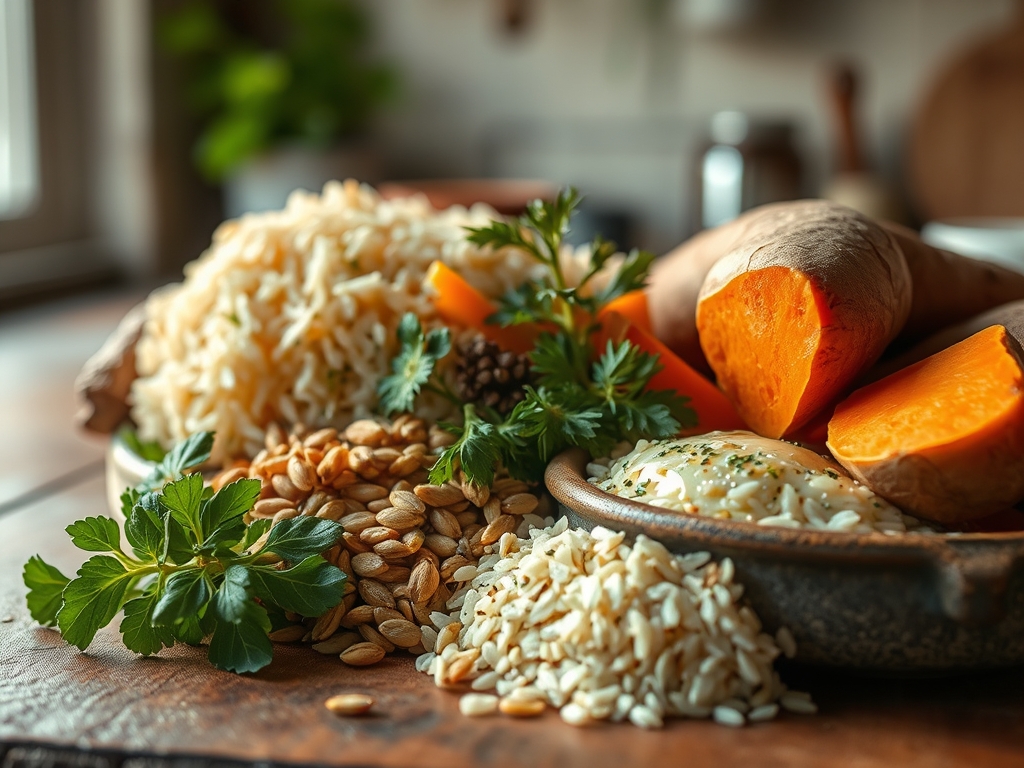
To achieve professional results, your mise-en-place must be precise. Start with a long-grain rice like Basmati or Jasmine; these varieties have a higher ratio of amylose to amylopectin, which ensures the grains remain distinct rather than turning into a viscous mush. For the tubers, seek out Beauregard or Jewel sweet potatoes. These are high in amylase enzymes, which break down complex starches into maltose during the cooking process, providing that signature natural sweetness.
Your aromatics are equally vital. You will need fresh ginger and garlic, which contain sulfur compounds that mellow and sweeten when sautéed. For fats, choose a high-smoke-point oil like avocado oil or clarified butter (ghee) to allow for a proper sear on the potato cubes without the fat breaking down. Use a digital scale to measure 200 grams of rice and 300 grams of cubed potato for the perfect ratio.
Smart Substitutions:
If you are looking for a lower glycemic index, swap white rice for black "forbidden" rice or quinoa. The black rice adds a nutty, anthocyanin-rich profile that pairs beautifully with the orange hues of the potato. If sweet potatoes are unavailable, a Kabocha squash offers a similar density and sweetness. For a piquant kick, swap regular salt for smoked Maldon sea salt to mimic a wood-fired flavor profile.
The Clock:
Efficiency in the kitchen is all about "Chef's Flow." Total preparation time for these rice and sweet potato recipes typically clocks in at 15 minutes, with a cook time of 25 to 30 minutes. The flow begins by soaking your rice. This step hydrates the outer starch layer, ensuring even heat penetration. While the rice soaks, use a bench scraper to organize your diced potatoes and aromatics.
The cooking phase is largely passive once the pot is covered, but the "rest" period is the most critical segment of the clock. Allowing the pot to sit off the heat for 10 minutes allows the steam to redistribute, preventing the bottom layer from becoming waterlogged while the top remains dry. Total time from pantry to plate is approximately 50 minutes.
The Masterclass:
1. The Rinse and Soak
Place your rice in a fine-mesh strainer and rinse until the water runs clear. This removes excess surface starch that causes clumping. Soak the grains in cold water for 20 minutes.
Pro Tip: Rinsing prevents the "gumming" effect. By removing free amylose from the surface, you ensure each grain remains an individual entity after gelatinization occurs.
2. The Maillard Sear
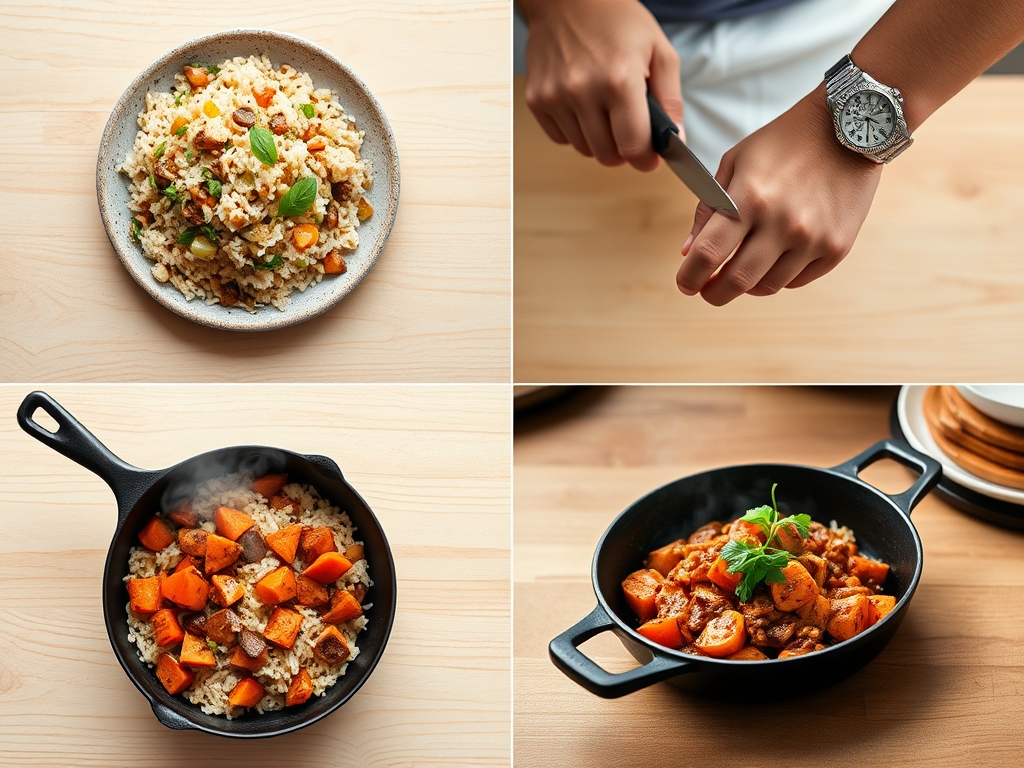
Heat a heavy-bottomed skillet or saucier over medium-high heat. Add your fat and the cubed sweet potatoes. Do not crowd the pan. Sear until a golden-brown crust forms on at least two sides.
Pro Tip: This is the Maillard reaction. The amino acids and reducing sugars react under high heat to create hundreds of different flavor compounds that raw or boiled potatoes simply lack.
3. Infusing the Aromatics
Lower the heat to medium and add your minced ginger, garlic, and spices. Use a microplane for the ginger to create a paste that integrates seamlessly into the oil. Sauté for 60 seconds until fragrant.
Pro Tip: Fat is a flavor carrier. By "blooming" your spices in oil, you extract fat-soluble volatile oils, ensuring the flavor is carried through the entire dish rather than just sitting on the surface.
4. Deglazing and Toasting
Add the drained rice to the pan with the potatoes. Stir for 2 minutes to toast the grains until they look slightly translucent at the edges. Use a splash of vegetable stock to deglaze any browned bits from the bottom.
Pro Tip: Toasting the rice creates a protective coating of oil around each grain. This limits water absorption just enough to maintain a "firm to the bite" or al dente texture.
5. The Precision Simmer
Add your liquid (water or stock) at a 1:1.5 ratio. Bring to a boil, then immediately drop the heat to the lowest setting and cover with a tight-fitting lid.
Pro Tip: Thermal carryover is real. A tight lid traps steam, creating a pressurized environment that cooks the rice and potatoes uniformly without the need for stirring, which would break the delicate grains.
6. The Steam Rest
Once the liquid is absorbed, turn off the heat but do not lift the lid. Let the pot sit for 10 minutes. Use a fork to gently aerate and fluff the mixture before serving.
Pro Tip: During this rest, the moisture trapped in the center of the grain migrates toward the drier surface. This equilibrium results in a uniform texture from the core to the exterior.
The Deep Dive:
From a macro nutrition perspective, rice and sweet potato recipes are a powerhouse of complex carbohydrates and Vitamin A. A single serving provides nearly 100 percent of your daily beta-carotene requirements. To make this Keto-friendly, you would need to swap the rice for cauliflower rice and significantly reduce the potato portion, though the traditional version is naturally gluten-free and vegan-friendly if using plant-based oils.
The Fix-It:
- Mushy Rice: This happens if you use too much water. Fix it by spreading the rice on a sheet tray and placing it in a 300-degree oven for 5 minutes to evaporate excess moisture.
- Hard Potatoes: If the potatoes are still firm when the rice is done, you likely cut them too large. Next time, aim for a 1/2-inch dice. To fix it now, add two tablespoons of water and steam for 5 more minutes.
- Burnt Bottom: If you smell burning, immediately plunge the bottom of the pot into cold water to stop the cooking. Do not scrape the bottom; transfer the unburnt top portion to a new bowl.
Meal Prep Science:
When reheating, starch undergoes retrogradation, where it becomes hard and crystalline. To restore the "day-one" texture, add a teaspoon of water and cover tightly before microwaving. This creates a mini-steam chamber that re-gelatinizes the starch molecules.
The Wrap-Up:
There is a profound satisfaction in mastering the basics. By focusing on the science of the sear and the precision of the simmer, you turn a simple bowl of rice and sweet potatoes into a culinary event. These recipes are versatile, forgiving, and deeply nourishing. Now that you understand the "why" behind the rinse and the rest, your kitchen will transform into a laboratory of flavor. Grab your saucier and start experimenting; your best meal is only a simmer away!
The Kitchen Table:
Can I use brown rice for these recipes?
Yes, but you must adjust the liquid ratio to 1:2 and increase the cook time to 45 minutes. Brown rice retains the bran layer, which requires more hydration and heat to soften compared to polished white rice.
Why are my sweet potatoes falling apart?
This usually occurs from over-stirring or using a "moist" variety like Garnet for too long. To maintain structural integrity, sear them first to create a crust and avoid stirring once the liquid is added to the pot.
What is the best way to store leftovers?
Cool the mixture quickly by spreading it on a tray, then store in an airtight container for up to four days. Rapid cooling prevents the growth of Bacillus cereus, a common bacteria found in cooked starchy foods.
Can I cook this in a rice cooker?
Absolutely. Simply add all ingredients, including the seared potatoes and aromatics, into the cooker. Use the standard "White Rice" setting. The machine's internal sensors will detect when the liquid is fully absorbed and switch to "Warm" automatically.