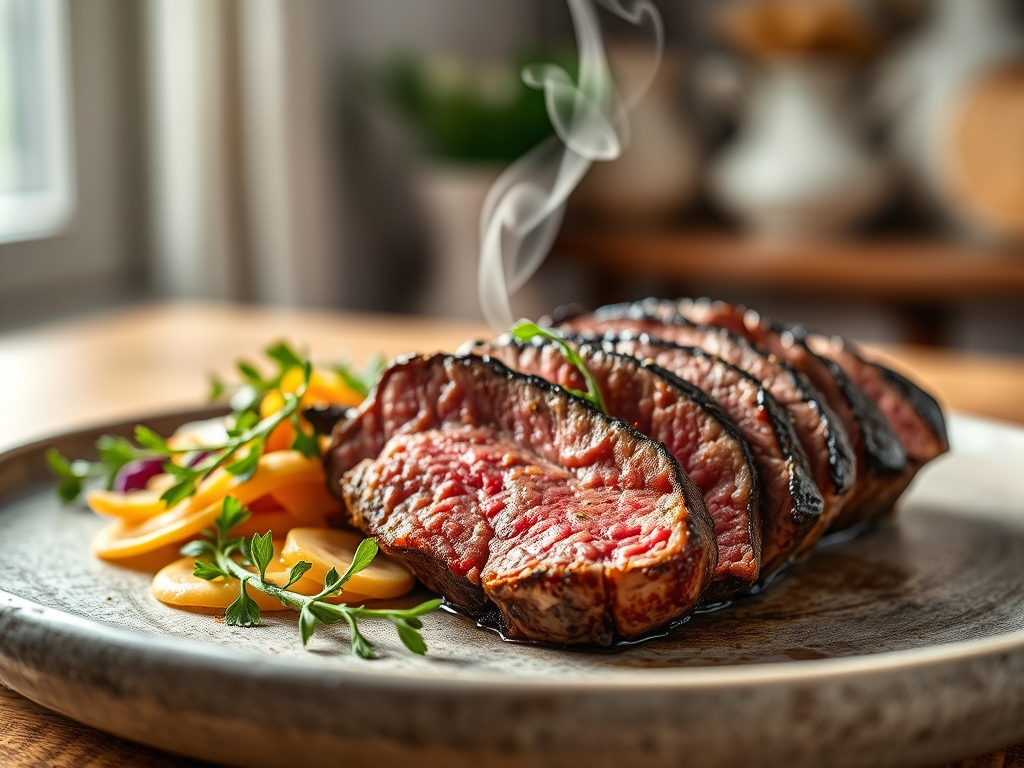
Picture the scene; a quiet Sunday afternoon transformed by the intoxicating aroma of caramelizing fats and toasted peppercorns. There is a specific, primal magic that happens when high heat meets a prime cut of meat. If you have been scrolling through endless roast sirloin beef recipes looking for that elusive, edge to edge pink perfection, consider your search officially over. We are moving beyond basic roasting into the realm of culinary architecture. We are going to build a crust so savory it shatters and a center so tender it feels like a luxury.
The sirloin is often the underdog of the beef world. It lacks the fatty decadence of a ribeye or the buttery softness of a tenderloin; however, it possesses a deep, muscular beefiness that those cuts simply cannot match. To unlock it, we have to treat the kitchen like a laboratory and the dining room like a stage. We are talking about precise temperature control, strategic seasoning, and the patience of a saint. Put down the dull knife and grab your digital scale. We are about to elevate your Sunday dinner from a standard meal to a masterclass in molecular gastronomy.
The Gathers:
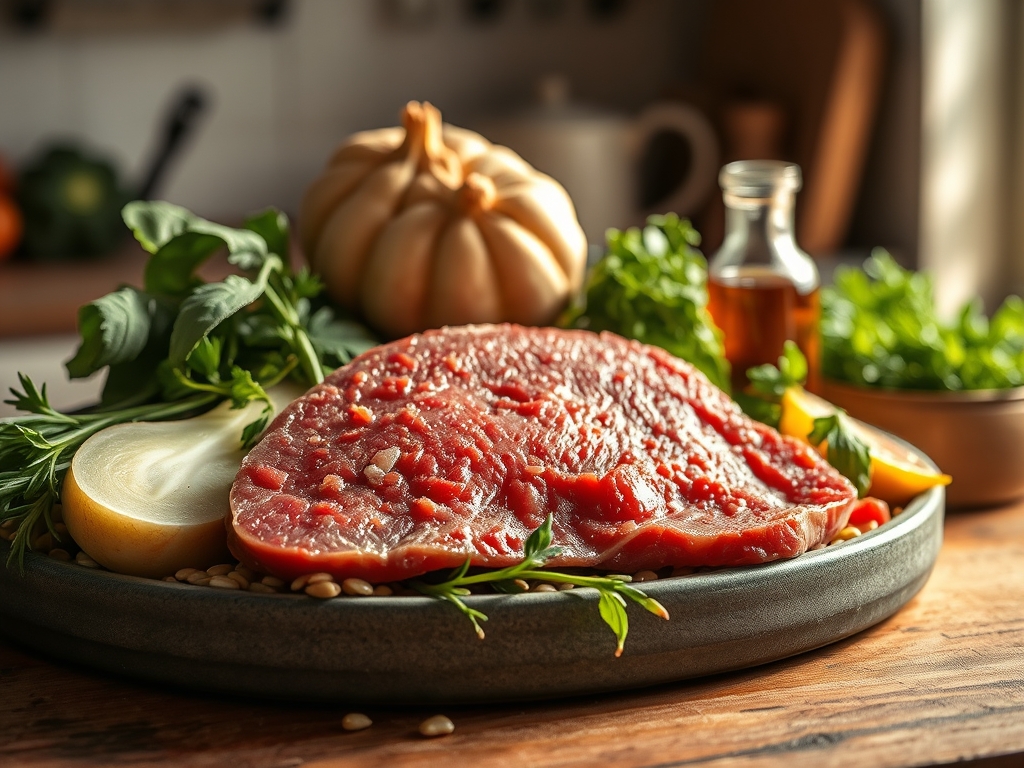
Before we strike a match, we must assemble our components. A successful roast begins with the quality of the raw protein. Look for a top sirloin butt roast with a thick, creamy fat cap. This fat is our insurance policy; as it heats, it will render, bathing the lean muscle fibers in liquid gold. You will need high-quality kosher salt for its jagged crystal structure, which adheres better to the meat surface than fine table salt.
For the aromatic crust, gather fresh rosemary and thyme. We are not just tossing them in; we are going to infuse the exterior. You will need a microplane for zesting garlic into a fine paste and a heavy-bottomed skillet (cast iron is king here) for the initial sear. Do not forget the black peppercorns. Use a mortar and pestle rather than a pre-ground shaker to ensure the volatile oils are fresh and piquant.
Smart Substitutions: If you cannot find a top sirloin, a tri-tip is a fantastic alternative, though it requires a shorter cook time due to its tapered shape. For a dairy-free richness, swap the finishing butter for a high-smoke-point avocado oil infused with nutritional yeast to mimic that umami punch. If you are avoiding alcohol, replace the red wine deglaze with a splash of pomegranate juice and a teaspoon of balsamic vinegar to maintain that essential acidity.
The Clock: A Study in Chef's Flow
Timing is the difference between a masterpiece and a shoe sole. This process requires roughly 20 minutes of active prep and 60 to 90 minutes of passive roasting, depending on the weight of your cut. However, the most critical time block is the "Dry Brine" phase. Ideally, you should salt your beef 24 hours in advance. This allows the salt to penetrate the deep tissue through osmosis, rearranging the protein structures so they can hold more moisture during the cook.
The "Chef's Flow" looks like this: Prep the meat on Saturday night. On Sunday, take the meat out of the fridge two hours before cooking to take the chill off. This ensures even heat penetration. Spend 10 minutes on the sear, 45 minutes in the oven, and a mandatory 20 minutes for the rest. If you rush the rest, you lose the juice. It is that simple.
The Masterclass:
1. The Surface Preparation
Pat the beef bone-dry with paper towels. Any surface moisture will turn to steam, preventing the Maillard reaction from occurring. Apply a generous coating of your salt and spice rub, pressing it into the flesh with your palms.
Pro Tip: This is about hygroscopy. Salt draws moisture out, dissolves into a brine, and is then reabsorbed into the meat. If you cook it while the surface is wet, you will boil the exterior rather than searing it.
2. The High-Octane Sear
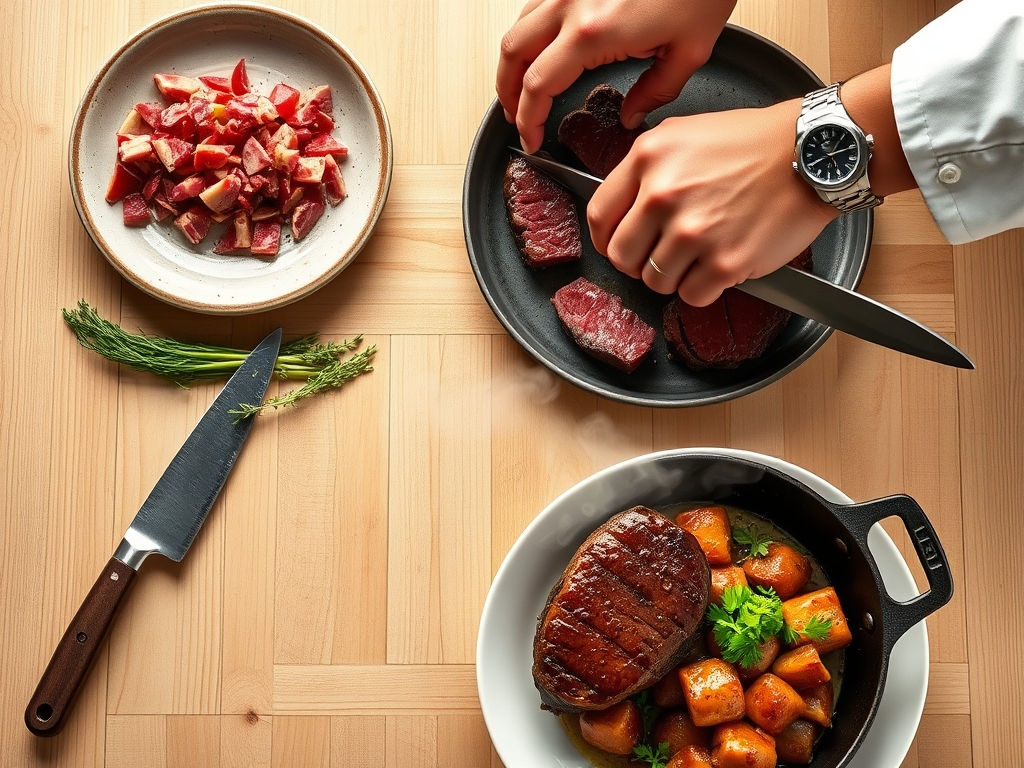
Heat your cast iron skillet until it is screaming hot. Add a high-smoke-point oil. Use your tongs to press the fat cap side down first. Hold it there until the fat renders into a golden, viscous liquid. Sear every single side until a dark brown crust forms.
Pro Tip: This is enzymatic browning. By creating this crust now, you are developing hundreds of flavor compounds that cannot be created at the lower temperatures of a standard oven.
3. The Low and Slow Transition
Place the beef on a wire rack set inside a rimmed baking sheet. This allows hot air to circulate under the meat, ensuring the bottom does not get soggy. Slide it into a 250 degree Fahrenheit oven.
Pro Tip: We use a low temperature to minimize the "gray band" of overcooked meat. A gentle heat gradient ensures the center reaches the target temperature at the same time as the exterior layers.
4. The Aromatic Baste
During the last ten minutes of cooking, place a knob of butter, smashed garlic, and thyme in a small saucier. Once the butter foams, brush it over the roast.
Pro Tip: This adds a layer of fat-soluble flavor. The milk solids in the butter will brown, adding a nutty complexity to the final profile.
5. The Thermal Pivot
Use a digital probe thermometer to monitor the internal temperature. For a perfect medium-rare, pull the roast out of the oven when it hits 125 degrees Fahrenheit.
Pro Tip: This accounts for thermal carryover. The internal temperature will continue to rise by 5 to 10 degrees while the meat rests on the counter.
6. The Mandatory Rest
Transfer the roast to a wooden cutting board. Do not tent it tightly with foil; this will trap steam and soften your beautiful crust. Let it sit undisturbed for at least 20 minutes.
Pro Tip: Resting allows the muscle fibers, which tightened during cooking, to relax. This redistributes the internal juices so they stay in the meat instead of flooding your board.
7. The Pan Sauce Deglaze
While the meat rests, take that roasting pan and place it over a burner. Add beef stock and a splash of wine. Use a bench scraper or whisk to lift the fond (the brown bits) from the bottom.
Pro Tip: The fond is concentrated umami. By deglazing, you are capturing those caramelized proteins and incorporating them into a silky, savory sauce.
8. The Precision Slice
Identify the grain of the meat. Use a long, sharp carving knife to slice against the grain into thin ribbons.
Pro Tip: Slicing against the grain shortens the muscle fibers, making every bite feel significantly more tender on the palate.
The Deep Dive: Nutrition and Troubleshooting
From a macro perspective, sirloin is a powerhouse. It is naturally leaner than ribeye, offering high protein density with significant amounts of B12, zinc, and iron. For those on a Keto protocol, the fat cap provides the necessary lipids. If you are Paleo, ensure your beef is grass-fed to optimize the Omega-3 to Omega-6 ratio.
The Fix-It: Common Pitfalls
- The Meat is Gray: This happens if you skip the sear or crowd the pan. Fix it by ensuring the pan is at the smoke point before the meat touches it.
- The Roast is Tough: You likely skipped the rest or sliced with the grain. If it is already sliced, serve it with a warm, viscous demi-glace to add moisture back to the fibers.
- Uneven Cooking: This is caused by putting cold meat into the oven. Always let the roast sit at room temperature for at least 90 minutes prior to cooking.
Meal Prep Science: To reheat without losing quality, avoid the microwave. The microwave agitates water molecules, which toughens the protein. Instead, slice the cold beef and "warm" it by pouring hot gravy over the slices. This raises the temperature gently without re-cooking the meat.
The Wrap-Up:
Mastering roast sirloin beef recipes is about more than just following a set of instructions; it is about understanding the physics of heat and the chemistry of flavor. When you pull that burnished, mahogany roast from the oven, you aren't just a cook; you are a conductor of a delicious, multi-sensory symphony. Remember to trust your thermometer, respect the rest, and always, always buy the best meat your budget allows. Now, go forth and conquer that kitchen!
The Kitchen Table:
How do I get a better crust on my roast?
Ensure the meat surface is bone-dry before searing. Use a heavy cast iron skillet to maintain high heat and do not move the meat until a deep brown crust naturally releases from the pan surface.
What is the best temperature for medium-rare sirloin?
Aim for an internal temperature of 130 to 135 degrees Fahrenheit after resting. To achieve this, remove the beef from the oven when the thermometer reads 125 degrees to account for carryover cooking.
Can I cook a sirloin roast in a slow cooker?
While possible, you will lose the textural contrast of the crust. If using a slow cooker, always sear the meat in a skillet first to develop flavor through the Maillard reaction before braising.
Why is my roast sirloin tough?
Toughness usually results from overcooking or failing to slice against the grain. Sirloin is a lean muscle; if it passes 145 degrees, the proteins shrink and expel moisture, resulting in a dry, chewy texture.