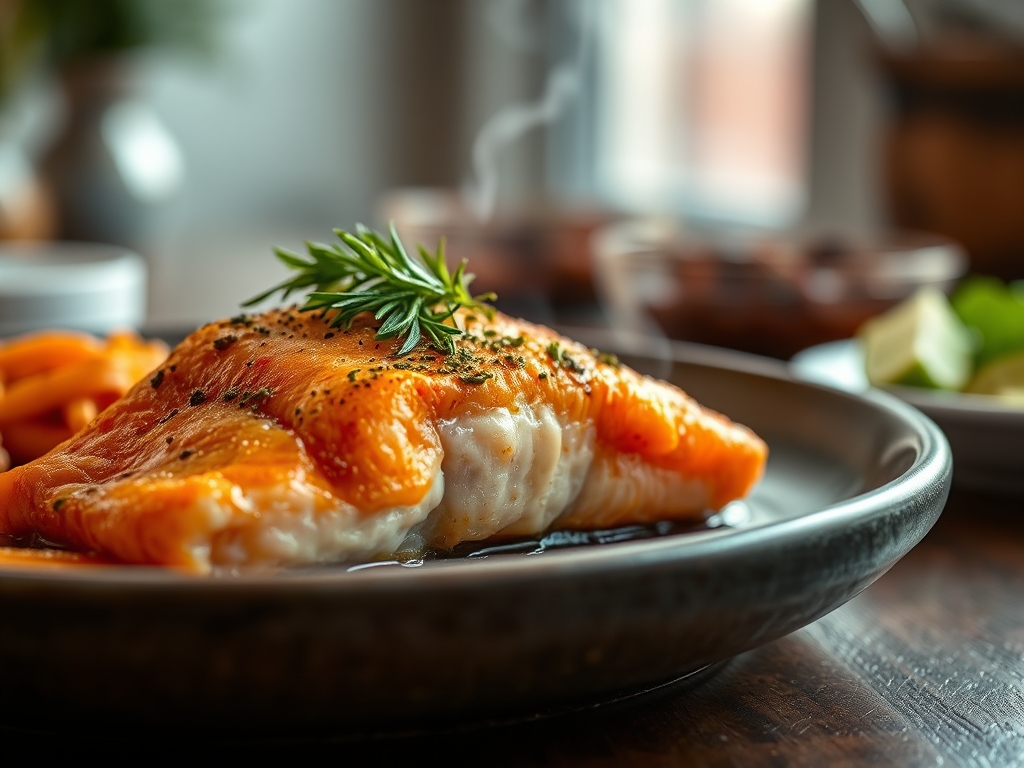
Close your eyes and listen for that distinct, aggressive sizzle as cold protein meets a shimmering, hot heavy-bottomed skillet. That sound is the overture to a masterpiece. When you are hunting for the ultimate old bay salmon recipes, you are looking for more than just dinner; you are looking for a chemical transformation. The piquant aroma of celery salt, paprika, and black pepper begins to bloom the moment it hits the heat. It is a sensory overload that promises a perfect balance of salt, heat, and brine. We are not just cooking fish here. We are engineering a crust that shatters under a fork to reveal a buttery, translucent interior. This is the intersection of Maryland tradition and modern culinary science. Whether you are a seasoned pro or a kitchen novice, mastering the art of the sear with this iconic spice blend will change your Tuesday nights forever. Let us get into the grit of how to make this happen with precision and flair.
The Gathers:
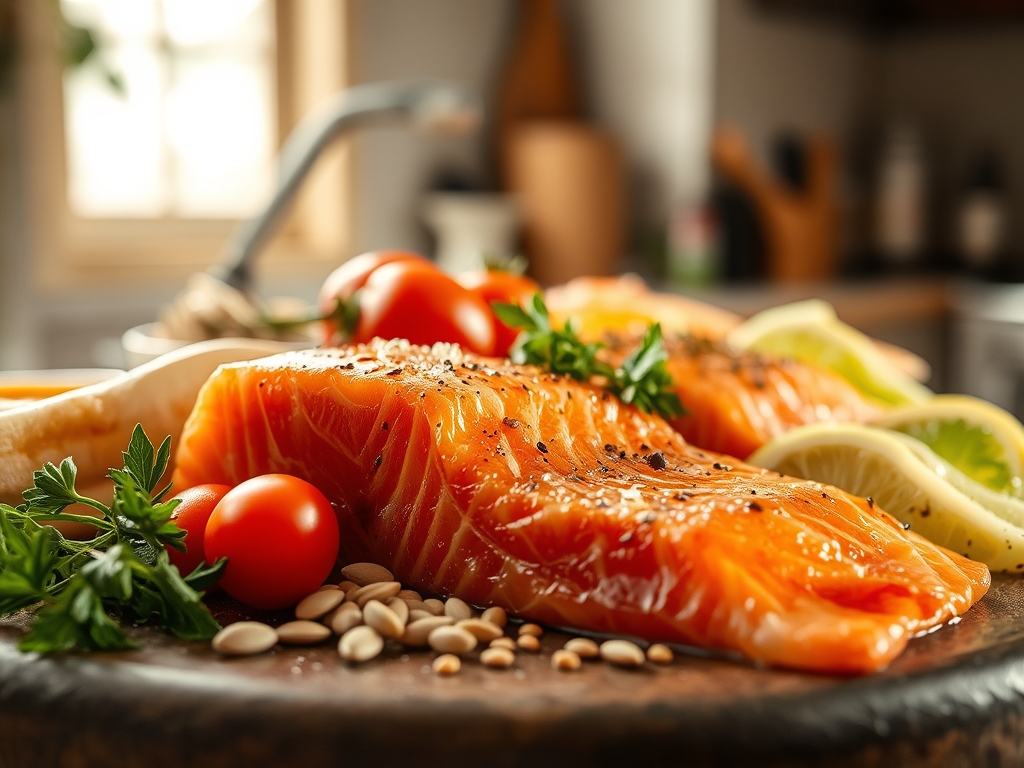
To execute these old bay salmon recipes with professional finesse, your mise-en-place must be exact. Start with high-quality Atlantic or King salmon fillets. Use a digital scale to ensure each portion is a uniform six ounces; this ensures even thermal distribution across the pan. You will need a high-smoke-point fat like avocado oil or clarified butter (ghee) to facilitate the Maillard reaction without scorching.
Your spice tray should feature fresh Old Bay seasoning. Check the expiration; the volatile oils in ground cloves and cardamom dissipate over time. Complement this with fresh aromatics: sprigs of thyme, smashed garlic cloves, and a bright lemon. For the "Smart Substitutions," if you are watching your sodium, blend smoked paprika, celery seed, and a pinch of cayenne to mimic the profile. If you lack a heavy-bottomed skillet, a cast iron pan is your best friend for heat retention. Use a microplane to zest your citrus directly over the fish at the final stage to capture the delicate essential oils that would otherwise evaporate under high heat.
The Clock
Efficiency in the kitchen is about "Chef's Flow." This is the rhythmic transition from prep to plate that prevents frantic movements. For these old bay salmon recipes, allocate ten minutes for preparation. This includes patting the fish bone-dry to remove surface moisture, which is the enemy of a crisp sear.
The cooking phase is a brief but intense six to eight minutes. We utilize a 70/30 rule: seventy percent of the cooking happens skin-side down to render the subcutaneous fat and create a structural crust. The final two minutes are for the flip and a luxurious butter baste. Factor in a mandatory three-minute rest period. This allows the internal muscle fibers to relax and reabsorb the juices, ensuring every bite is succulent rather than dry.
The Masterclass
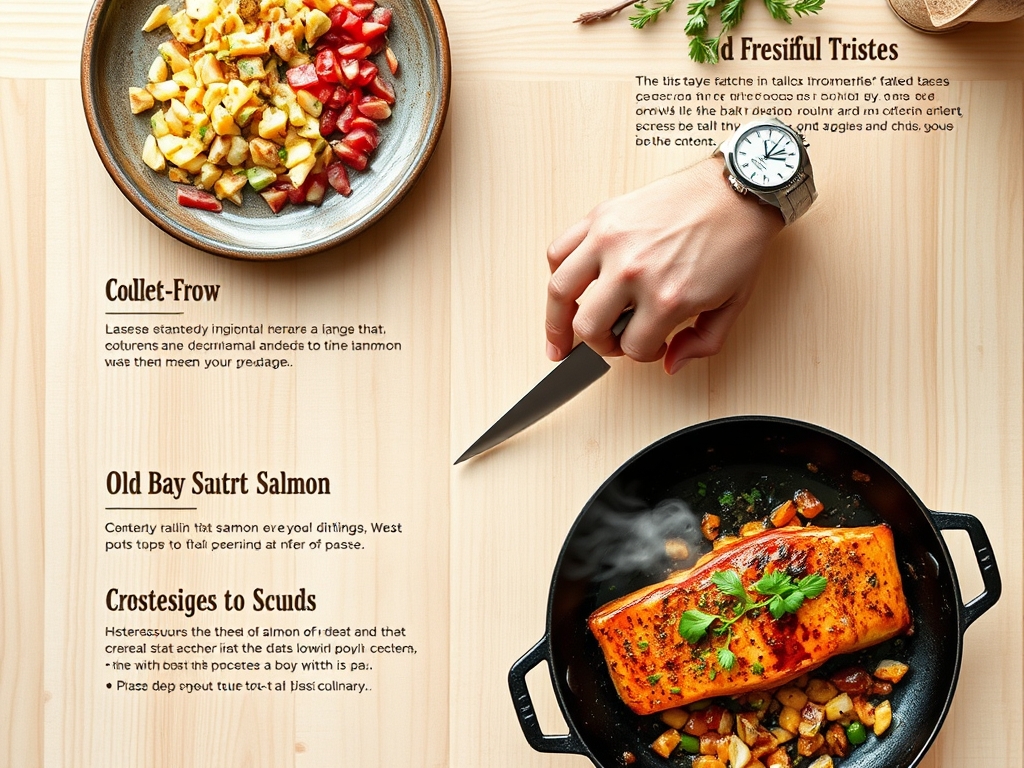
1. The Desiccation Phase
Use a lint-free paper towel to press firmly onto the surface of the salmon. Moisture creates steam, and steam prevents browning. Once dry, apply a thin film of oil before the seasoning. This creates an adhesive layer for the spices.
Pro Tip: This is known as surface area maximization. Removing water allows the temperature to rise above 212 degrees Fahrenheit instantly, triggering the Maillard reaction which creates hundreds of new flavor compounds.
2. The Seasoning Saturation
Generously coat the flesh side with Old Bay. Do not just sprinkle; press the spices into the meat with the flat of your knife or a bench scraper. This ensures the seasoning stays on the fish rather than floating away in the oil.
Pro Tip: Salt in the seasoning acts as a denaturant. It begins to break down the tight protein curls on the surface, allowing for a more tender bite and better spice penetration.
3. The Thermal Shock
Heat your skillet until the oil is shimmering but not smoking. Place the salmon skin-side down away from you to avoid oil splatter. Use tongs to press the fillet down for the first thirty seconds to prevent the skin from curling.
Pro Tip: This prevents the "bowing" effect. By maintaining flat contact, you ensure the heat is conducted evenly across the entire surface of the skin for maximum crunch.
4. The Butter Baste
In the final two minutes, drop a knob of cold butter, smashed garlic, and thyme into the pan. Tilt the skillet so the fat pools at the bottom and use a large spoon to continuously drench the salmon in the foaming butter.
Pro Tip: This is convection cooking within a pan. The hot fat carries the flavors of the aromatics into every crevice of the fish while providing a final hit of thermal energy to reach the desired internal temperature.
5. The Carryover Rest
Remove the salmon when a digital thermometer reads 125 degrees Fahrenheit for medium-rare. Place it on a wire rack rather than a flat plate to prevent the bottom from becoming soggy.
Pro Tip: Thermal carryover will continue to raise the internal temperature by another 5 to 7 degrees while the fish rests. Pulling it early ensures you never hit the "chalky" overcooked stage.
The Deep Dive
When we look at the macro nutrition of old bay salmon recipes, we are talking about a powerhouse of Omega-3 fatty acids and high-quality protein. A standard serving offers roughly 34 grams of protein and 18 grams of healthy fats. For a Keto-friendly version, serve alongside asparagus sautéed in the leftover pan drippings. For a Vegan swap, the Old Bay seasoning works wonders on "Tofu Steaks" or thick slices of roasted cauliflower. If you are Gluten-Free, rest easy; Old Bay is naturally GF, but always double-check your specific spice tin.
"The Fix-It" section is your safety net. If your skin is sticking, you likely tried to flip it too early; wait for the proteins to naturally release from the metal. If the spices are burning, your heat is too high; move the pan off the burner for sixty seconds to recalibrate. If the fish is "bleeding" white gunk, that is albumin. It means you cooked it too fast or too hot. It is safe to eat but indicates the muscle fibers contracted too violently.
For meal prep, reheating salmon is a delicate science. Avoid the microwave. Instead, use a low-temperature oven (275 degrees) with a splash of water and a tight foil seal to rehydrate the proteins without overcooking them.
The Wrap-Up
You are now armed with the technical prowess to turn a simple piece of seafood into a culinary event. Old bay salmon recipes are about more than just a yellow tin; they are about understanding how heat, fat, and spice interact to create something sublime. Go grab your heavy-bottomed skillet, trust the science of the sear, and remember to let that fish rest. You have got this, chef!
The Kitchen Table
How do I keep the salmon skin crispy?
Ensure the skin is bone-dry before cooking. Start in a cold pan or a very hot one with high-smoke-point oil. Press the fillet down with a weight or spatula for the first minute to ensure total surface contact for even rendering.
Can I bake this instead of pan-searing?
Yes. Roast at 400 degrees Fahrenheit for 12 to 15 minutes. For the best texture, broil for the final two minutes to caramelize the Old Bay seasoning. Always use a digital thermometer to check for an internal temperature of 130 degrees.
What side dishes pair best with Old Bay salmon?
Classic pairings include roasted fingerling potatoes, garlicky green beans, or a crisp slaw. The acidity in a vinegar-based slaw cuts through the fatty richness of the salmon, while the starch in potatoes absorbs the piquant spices of the seasoning.
How long does cooked salmon stay fresh?
Cooked salmon remains optimal for three days when stored in an airtight container in the refrigerator. To maintain "day-one" quality, wrap the fillets tightly in foil before chilling to prevent the refrigerator air from dehydrating the delicate muscle fibers.