
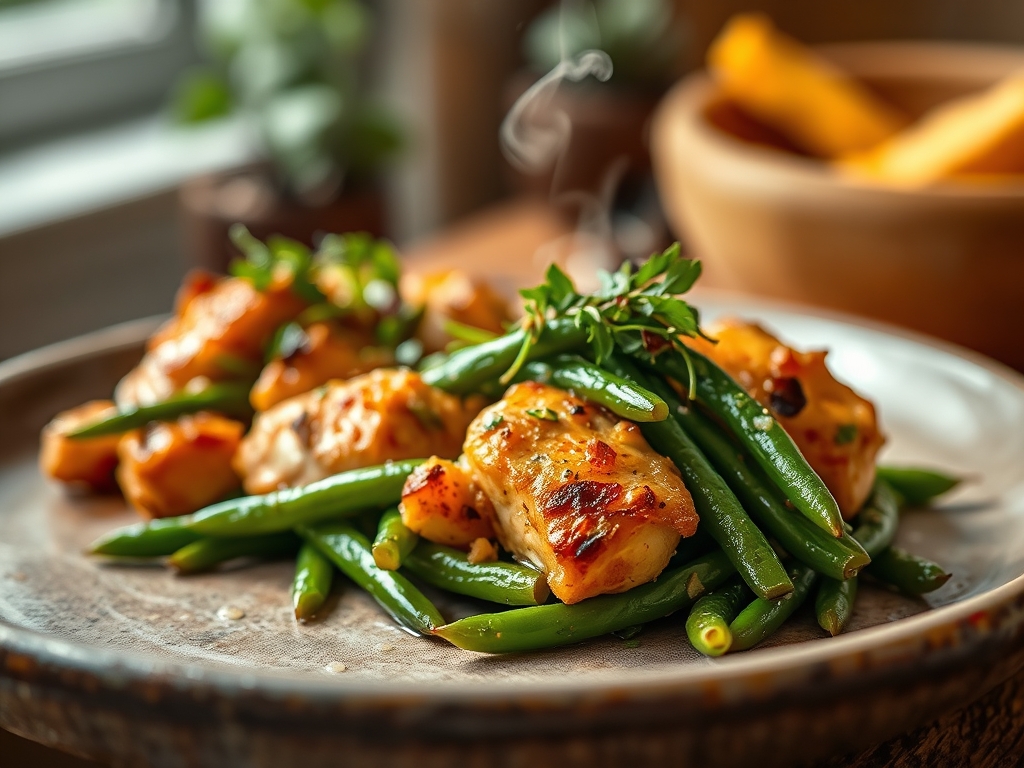
Picture the sound of a heavy-bottomed skillet meeting a high-flame burner; it is the percussion of a kitchen in motion. When the chicken thighs hit the oil, that immediate hiss is the sound of water evaporating to make way for the golden crust of the Maillard reaction. These green bean chicken recipes are more than just a weeknight necessity. They are a masterclass in texture and timing. We are balancing the snap of chlorophyll-rich legumes against the succulent, protein-dense bite of perfectly seared poultry. It is fast, it is efficient, and frankly, it is the smartest way to feed your soul without spending three hours at the stove.
The Gathers:
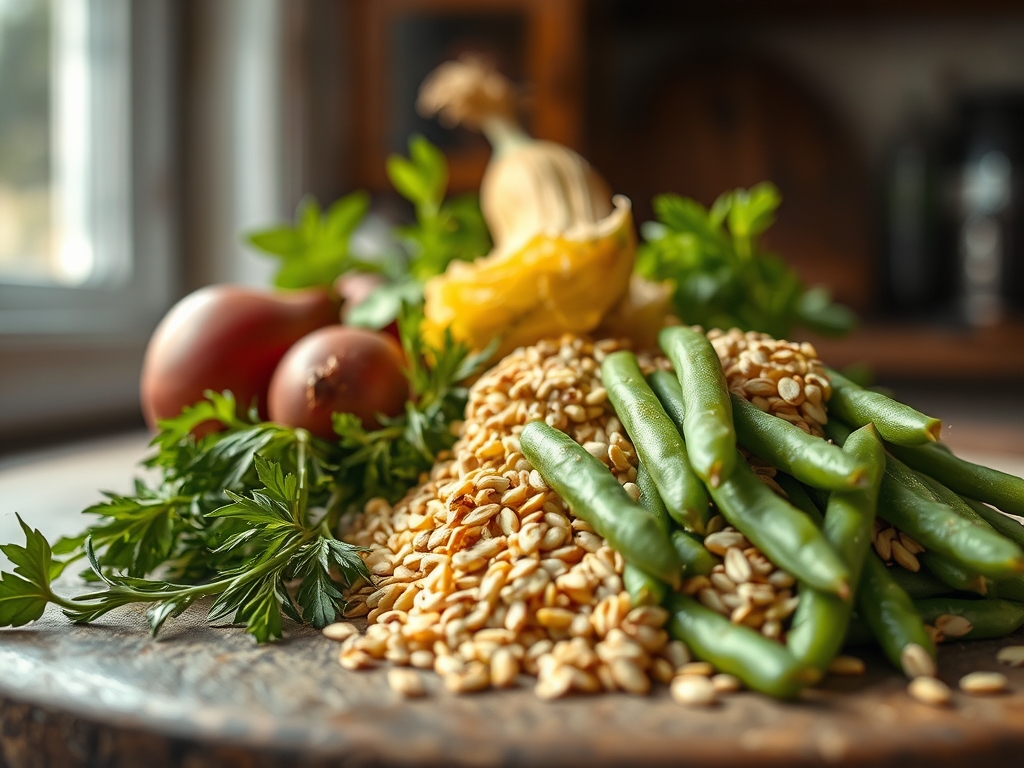
Before we ignite the flame, we must respect the mise-en-place. For these green bean chicken recipes, you need ingredients that offer a spectrum of volatile aromatics and structural integrity. Start with one pound of chicken breast or thighs, patted bone-dry to prevent steaming. Your green beans should be "squeaky" to the touch; this indicates high turgor pressure within the plant cells, ensuring a crisp finish. You will also need high-smoke-point fats like avocado oil or clarified butter to handle the heat without breaking down into acrid compounds.
Aromatics are the backbone here. Fetch your microplane to grate fresh ginger and garlic into a fine paste. This increases surface area, allowing the oils to infuse the cooking fat almost instantly. For the sauce, keep soy sauce, toasted sesame oil, and a touch of honey nearby to create a viscous glaze that clings to every crevice.
Smart Substitutions:
If green beans are out of season, wax beans or sugar snap peas offer a similar snap. For a plant-forward twist, firm tofu pressed with a weighted plate can mimic the chicken's texture. If you are avoiding soy, liquid aminos provide that piquant, savory depth without the gluten. Always use a digital scale to measure your proteins; precision here ensures consistent cooking times across all eight variations.
The Clock: 25 Minutes to Glory
Efficiency in the kitchen is about "Chef's Flow." This is the psychological state where your movements are optimized to minimize downtime. For these recipes, prep takes exactly 10 minutes. This includes trimming the stem ends of the beans and slicing the chicken into uniform half-inch strips.
The cooking phase is a sprint, lasting roughly 12 to 15 minutes. We spend the first five minutes rendering fat and searing the protein. The next five are dedicated to the vegetables, using the residual moisture to steam-fry the beans. The final minutes are for emulsifying the sauce and glazing the dish. By the time your table is set, the meal is ready.
The Masterclass
1. The High-Heat Sear
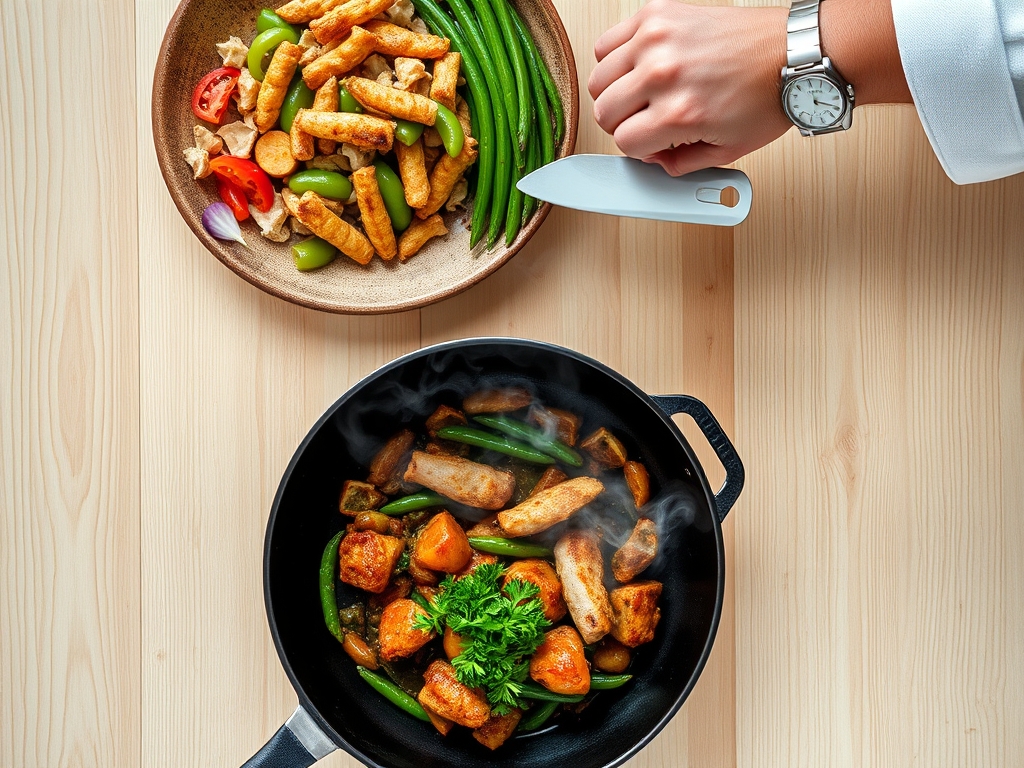
Place your chicken in a single layer in the skillet. Do not crowd the pan; overcrowding drops the surface temperature, leading to grey, boiled meat rather than a golden crust. Use tongs to flip each piece once a deep brown hue develops.
Pro Tip: This is enzymatic browning. By letting the chicken sit undisturbed, you allow amino acids and reducing sugars to reorganize into hundreds of flavor compounds.
2. Deglazing the Fond
Once the chicken is removed, you will see brown bits stuck to the pan. This is "fond," the concentrated essence of flavor. Pour in a splash of chicken stock or rice vinegar and use a wooden spoon to scrape it up.
Pro Tip: This process uses a solvent to lift flavor molecules that are otherwise trapped on the metal surface, integrating them into your final sauce.
3. Blistering the Beans
Add the green beans to the hot, deglazed pan. You want them to catch a bit of char while remaining vibrant green. Add a tablespoon of water and cover for sixty seconds to flash-steam the interiors.
Pro Tip: This preserves the chlorophyll. Overcooking breaks down the cell walls and turns the beans a dull olive drab as acids react with the magnesium in the plant's center.
4. The Aromatic Infusion
Push the beans to the side and add your garlic, ginger, and red pepper flakes directly into the center with a tiny bit of oil. Sauté for only 30 seconds until fragrant.
Pro Tip: Heat energy causes the essential oils in aromatics to aerate, filling your kitchen with scent and ensuring the flavor is distributed evenly through the fat.
5. Emulsifying the Glaze
Return the chicken to the pan and pour in your sauce mixture. Toss vigorously using a wide spatula or by shaking the pan handle to coat every surface.
Pro Tip: As the liquid reduces, the sugars and proteins bind together to create a viscous coating. This is the "glaze phase," where the sauce transforms from a watery liquid to a silk-like finish.
The Deep Dive
When we look at the macro nutrition, these green bean chicken recipes are a powerhouse. A standard serving provides roughly 35 grams of protein and 8 grams of fiber, with a glycemic load that is remarkably low. This keeps your blood sugar stable and your energy levels consistent throughout the evening.
Dietary Swaps:
For the Keto crowd, swap the honey for a drop of liquid monk fruit and serve over cauliflower rice. For a Vegan version, use seitan "chicken" and coconut aminos. If you are strictly Gluten-Free, always verify your oyster sauce or hoisin, as many brands use wheat-based thickeners.
The Fix-It:
- Tough Chicken: This is usually due to overcooking. Use a digital thermometer to pull the chicken at 160 degrees Fahrenheit; thermal carryover will bring it to the safe 165 mark while it rests.
- Soggy Beans: You likely added the sauce too early. Ensure the beans are "blistered" and dry before introducing liquids.
- Broken Sauce: If the sauce looks oily and separated, add a teaspoon of water and whisk vigorously to re-emulsify the fats and liquids.
Meal Prep Science:
To maintain "day-one" quality when reheating, avoid the microwave if possible. Use a small saucier on the stovetop with a teaspoon of water. This creates a steam-jacket effect that re-hydrates the chicken fibers without making the beans mushy.
The Wrap-Up
Mastering these green bean chicken recipes is like unlocking a culinary cheat code. You are utilizing high-heat physics and aromatic chemistry to turn basic ingredients into a restaurant-quality meal in under half an hour. It is vibrant, it is balanced, and it proves that healthy eating does not have to be a chore. Now, grab your favorite skillet and get searing; your future self will thank you for the leftovers.
The Kitchen Table
How do I keep green beans crisp in a stir fry?
Blanch them in boiling water for two minutes then shock in ice, or flash-steam them in the skillet for 60 seconds. This sets the color and softens the fiber while maintaining a structural "snap" during the final toss.
Can I use frozen green beans for these recipes?
Yes, but thaw and pat them completely dry first. Frozen beans have compromised cell walls from ice crystals, so they cook faster. Skip the steaming step and go straight to a high-heat sear to prevent them from becoming mushy.
What is the best cut of chicken for quick cooking?
Chicken thighs are more forgiving due to higher fat content, but thinly sliced breasts cook the fastest. For the best texture, slice against the grain to shorten the muscle fibers, making every bite tender and easy to chew.
Why is my stir fry sauce watery?
The sauce likely didn't reach a high enough temperature to reduce, or the vegetables released too much internal moisture. Ensure your pan is screaming hot and use a cornstarch slurry to help the sauce thicken and cling to the ingredients.