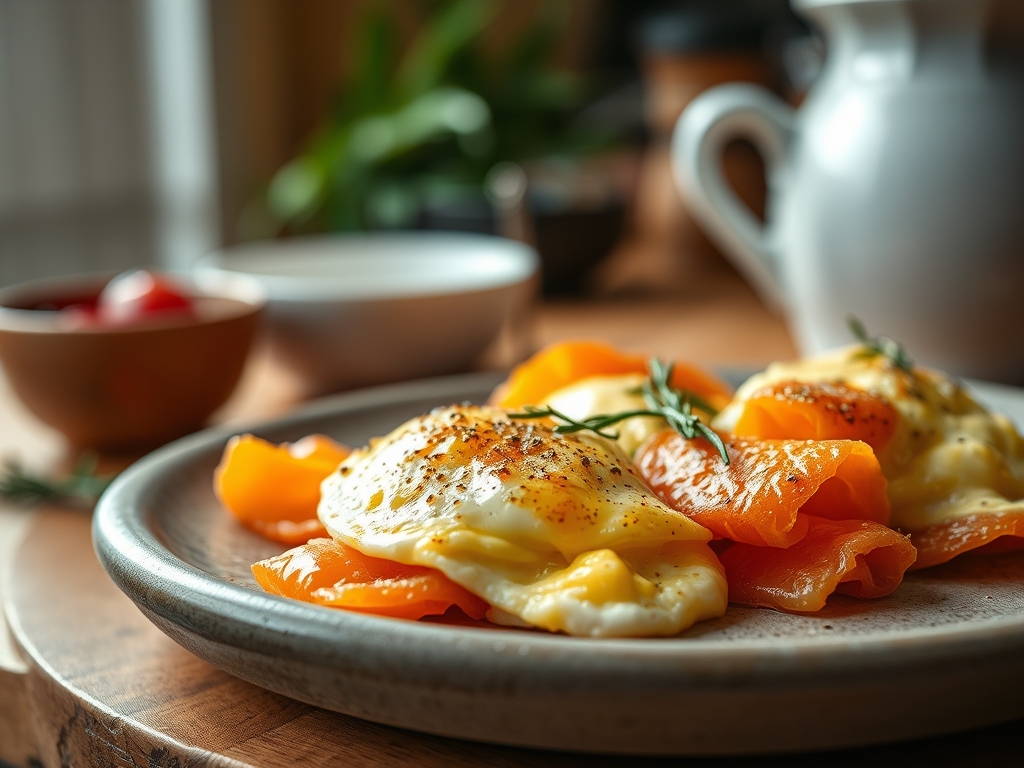
Imagine the first light of a slow Saturday hitting a plate of velvet gold. There is a specific, quiet luxury in the way cold, salt-cured fish meets the warmth of a soft curd. If you are hunting for the ultimate scrambled eggs with smoked salmon recipes, you are essentially looking for a masterclass in texture and temperature contrast. It is the culinary equivalent of a cashmere blanket; it is soft, expensive, and deeply comforting. We are moving beyond the rubbery, hotel-buffet tragedies of the past. Today, we are treating eggs like a delicate custard and salmon like the crown jewel it is. Whether you prefer a French-style soft scramble or a structured American fold, the science of the emulsion remains the same. We are aiming for a dish that is piquant, buttery, and intellectually satisfying. Grab your favorite apron and a heavy-bottomed skillet; we are about to turn a simple breakfast into a high-art experience that balances fat, salt, and acid with mathematical precision.
The Gathers:
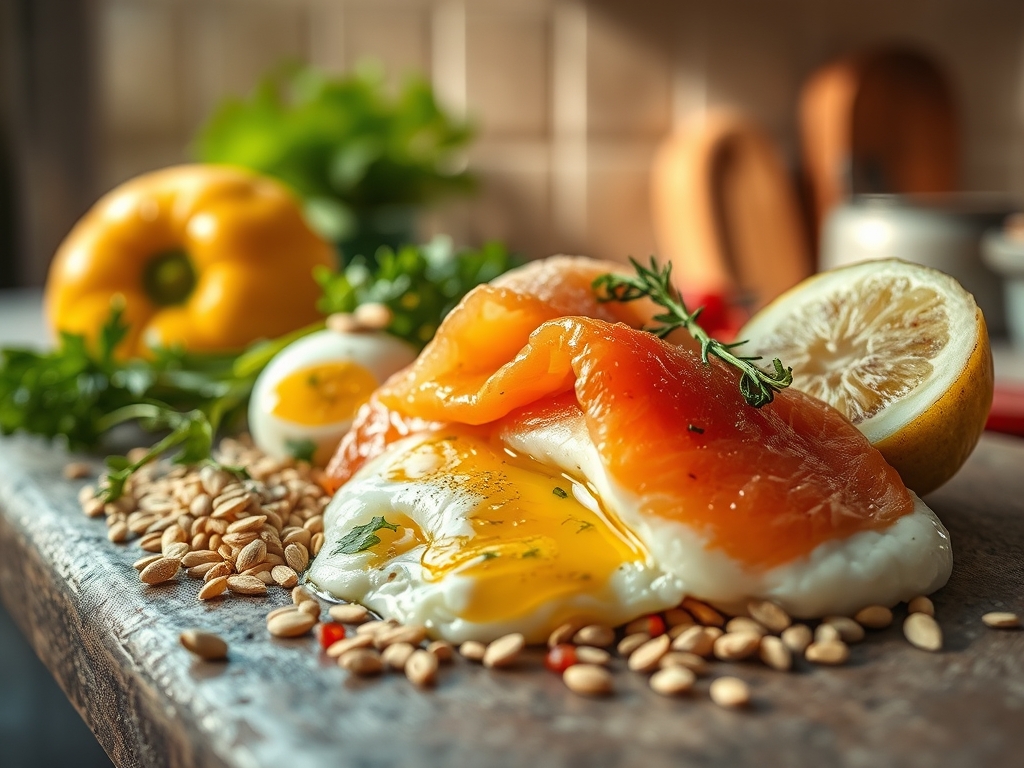
To execute these scrambled eggs with smoked salmon recipes, your mise-en-place must be flawless. Start with six large, pasture-raised eggs. Look for deep orange yolks, which indicate a higher fat content and a more viscous final texture. You will need four ounces of premium smoked salmon; specifically, look for "cold-smoked" varieties like Atlantic or Sockeye for that buttery mouthfeel. For the fat, use high-quality European butter with at least 82 percent butterfat. This ensures less water and more silkiness during the emulsification process.
For the aromatics, gather fresh chives, a lemon for zest, and high-fat dairy. I recommend heavy cream or creme fraiche rather than milk. Milk contains too much water, which can lead to "weeping" eggs. You will also need a microplane for the zest and a silicone spatula that can withstand high heat without warping.
Smart Substitutions: If you are avoiding dairy, a high-quality cashew cream provides the necessary fat without the lactose. If smoked salmon is unavailable, smoked trout offers a similar saline punch with a slightly firmer flake. For a sharper profile, swap chives for finely minced shallots that have been sweated in butter until translucent.
The Clock:
In the professional kitchen, we refer to the "Chef's Flow." This is the sequence of events that ensures nothing sits getting cold while something else is still cooking. For these recipes, your total active time is exactly 12 minutes.
Prep Time: 5 minutes. This involves cracking and whisking the eggs, mincing herbs, and slicing the salmon into bite-sized ribbons. Do not skip the whisking; you need to aerate the proteins to ensure a light lift.
Cook Time: 7 minutes. This is a low-and-slow game. If you see steam rising aggressively from your skillet, you are moving too fast. The goal is a gentle coagulation of proteins, not a frantic sear.
The Masterclass:
1. The Aeration Phase
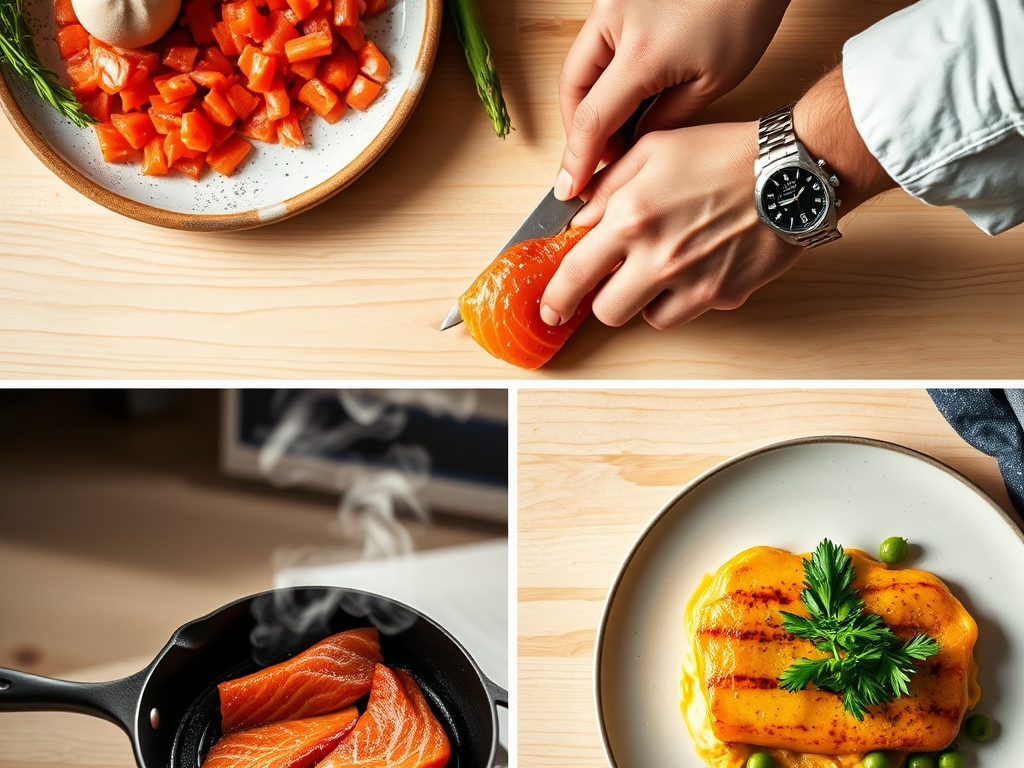
Crack your eggs into a glass bowl and use a fork or a small whisk to break the yolks. Whisk vigorously until the mixture is uniform in color with no visible streaks of white. This introduces air bubbles that expand during cooking, creating a lighter structure.
Pro Tip: This is the science of denaturation. By whisking, you are physically unravelling the protein strands. Adding a pinch of salt now, rather than at the end, helps stabilize these proteins so they do not squeeze out moisture when they hit the heat.
2. The Cold Start Technique
Place your heavy-bottomed skillet on the burner but do not turn it on yet. Add a tablespoon of cold butter and your egg mixture. Turn the heat to medium-low. This allows the butter to melt into the eggs as they warm up, creating a built-in sauce.
Pro Tip: This prevents thermal shock. When eggs hit a screaming hot pan, the proteins tighten instantly, leading to a tough, rubbery texture. A gradual temperature climb ensures a creamy, custard-like curd.
3. Constant Agitation
As the eggs begin to set, use your silicone spatula to constantly move the mixture. Scrape the bottom and sides of the pan continuously. You are looking to create small, soft curds rather than large, dry sheets.
Pro Tip: This is about managing thermal carryover. If you stop moving the eggs, the layer touching the pan will overcook while the top remains raw. Constant motion ensures even heat distribution across every molecule of the scramble.
4. The Salmon Integration
When the eggs are about 80 percent cooked (they should still look slightly wet), fold in your smoked salmon ribbons. The residual heat of the eggs is enough to warm the salmon without cooking it. You want the salmon to remain silky, not become flaky and opaque.
Pro Tip: Smoked salmon is a cured product. Applying direct, high heat to it will render the delicate fats too quickly, resulting in a fishy aroma and a dry texture. Keep it gentle.
5. The Finishing Acid
Just before plating, add a dollop of creme fraiche and a shower of fresh chives. Use your microplane to grate a tiny amount of lemon zest over the top. This provides a bright, citrusy lift that cuts through the intense richness of the fats.
Pro Tip: This is the "Fix-It" for flavor balance. The citric acid in the zest acts as a chemical counter-balance to the heavy lipids in the butter and egg yolks, making the dish feel lighter on the palate.
The Deep Dive:
Macro Nutrition: One serving of this dish is a protein powerhouse. You are looking at approximately 24 grams of protein, 18 grams of healthy fats (including Omega-3s from the salmon), and less than 2 grams of carbohydrates. It is a metabolic dream for anyone focused on sustained energy.
Dietary Swaps: For a Keto version, increase the butter and add avocado slices on the side. For a Vegan alternative, use a mung-bean based egg substitute and "carrot lox" seasoned with liquid smoke and dulse flakes. For Gluten-Free diners, ensure your smoked salmon has no malt-based flavorings.
The Fix-It:
- The Weeping Egg: If water is pooling on your plate, you likely used low-fat milk or overcooked the proteins. Fix this by adding a teaspoon of cornstarch to your raw eggs next time to bind the moisture.
- The Gray Salmon: If your salmon looks gray, it got too hot. Fold it in only at the very last second.
- The Rubbery Curd: If the eggs are bouncy, the heat was too high. Pull the pan off the burner every 30 seconds to regulate the temperature.
Meal Prep: Scrambled eggs are notoriously difficult to reheat. To maintain "day-one" quality, undercook them slightly if you plan to eat them later. Reheat in a bowl over a pot of simmering water (a bain-marie) rather than the microwave. This gentle steam prevents the proteins from tightening into a rubbery mess.
The Wrap-Up:
Mastering scrambled eggs with smoked salmon recipes is a rite of passage for any home cook who values the intersection of science and soul. It is about understanding that heat is a tool, not just a setting. By focusing on the emulsification of fats and the gentle coagulation of proteins, you transform basic ingredients into a restaurant-quality brunch. Remember to keep your movements fluid, your pan cool, and your ingredients premium. Now, go pour a coffee, grab your spatula, and create something beautiful.
The Kitchen Table:
Can I use lox instead of smoked salmon?
Yes, but be careful with salt. Lox is salt-cured but not smoked, meaning it is much saltier than traditional smoked salmon. Adjust your seasoning accordingly to avoid an oversalted dish.
Why do my eggs always turn out dry?
You are likely experiencing thermal carryover. Eggs continue to cook for at least sixty seconds after they leave the pan. Always remove them from the heat while they still look slightly "underdone" and wet.
What is the best pan for scrambled eggs?
A non-stick, heavy-bottomed skillet is essential. The heavy base ensures even heat distribution, preventing "hot spots" that cause uneven cooking, while the non-stick surface allows for the smallest, creamiest curds.
How do I make the eggs extra fluffy?
The secret is aeration and fat. Whisk your eggs until they are frothy before cooking. Adding a tablespoon of heavy cream or creme fraiche helps stabilize the air bubbles, resulting in a cloud-like texture.