
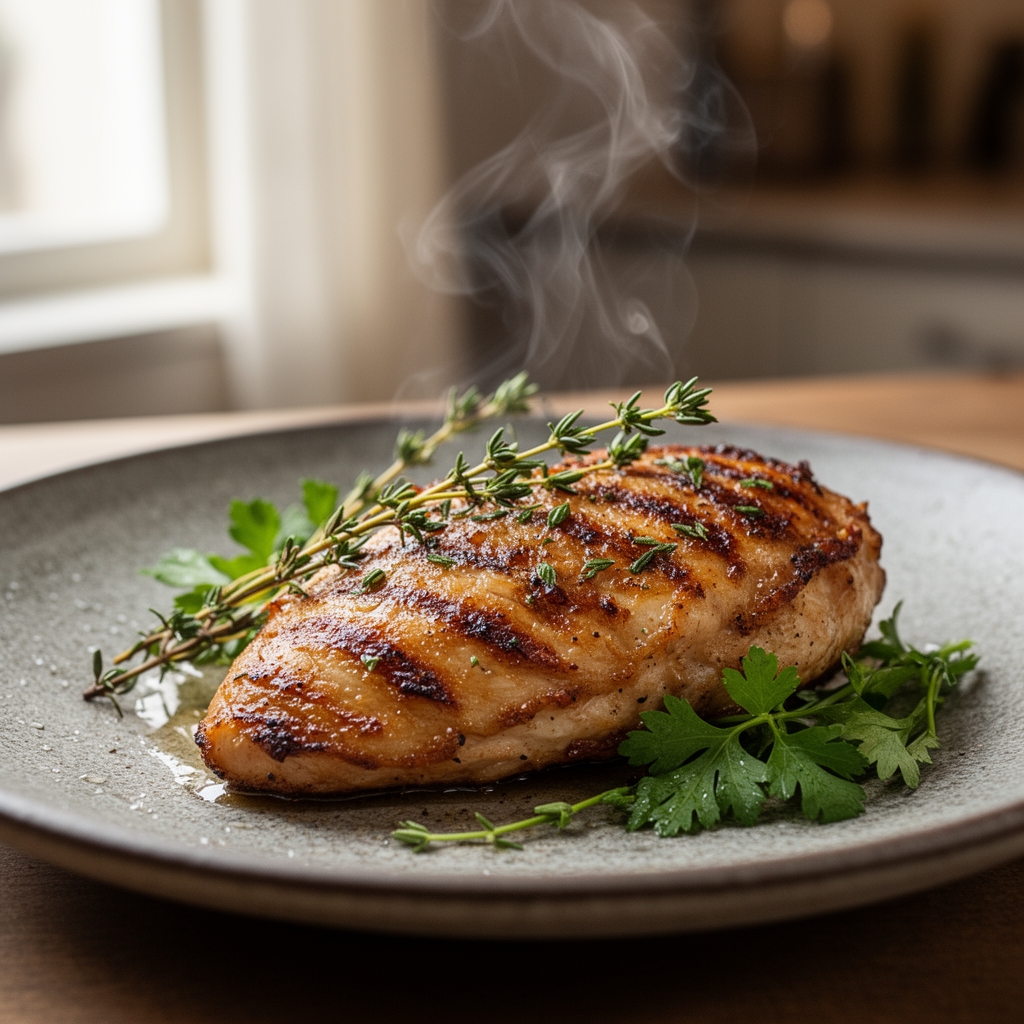
The sharp hiss of marinated chicken meeting a screaming-hot cast iron skillet releases a cloud of caramelized garlic, ginger, and soy that floods your kitchen with the promise of crispy, juice-locked perfection. That transformative moment separates bland weeknight protein from restaurant-caliber eating, and it hinges entirely on what happens before the heat. The best marinated chicken recipes master eight core flavor-boosting techniques that compress hours of traditional marinating into 30 minutes or less, leveraging enzymatic action, acid penetration, and strategic seasoning layering to deliver maximum taste with minimum wait.
The Gathers
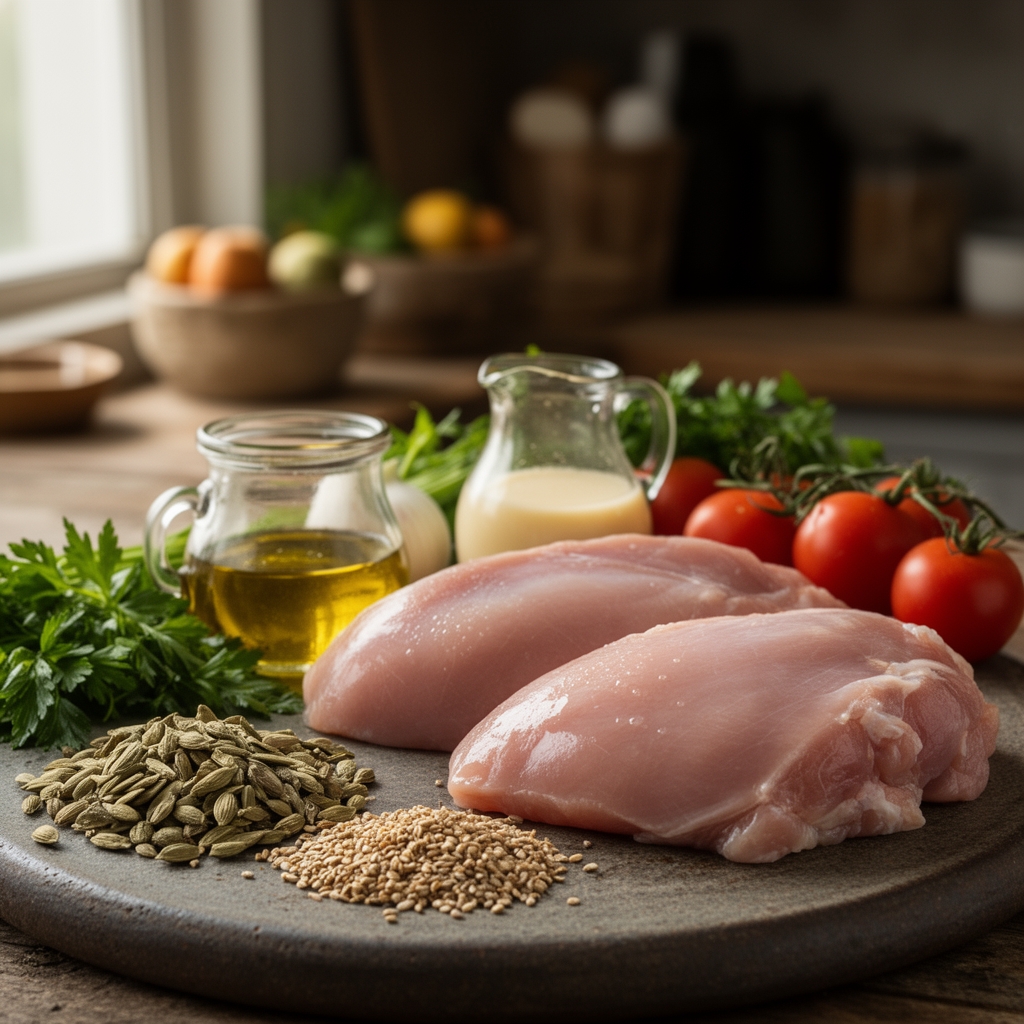
As you see in the ingredient spread below, the foundation rests on 4 bone-in, skin-on chicken thighs (about 680g total), chosen for their high intramuscular fat and collagen content. Kosher salt (2 teaspoons) and fresh-cracked black pepper (1 teaspoon) form the ionic backbone. The acid brigade includes 120ml plain yogurt (full-fat, live cultures), 2 tablespoons fresh lemon juice, and 1 tablespoon rice vinegar. Aromatics cluster around 4 garlic cloves (smashed and minced), 15g fresh ginger (microplaned), and 1 tablespoon Dijon mustard for emulsification. The flavor amplifiers are 2 tablespoons soy sauce, 1 tablespoon fish sauce, 1 teaspoon smoked paprika, and 2 teaspoons honey. Finally, 3 tablespoons neutral oil (grapeseed or avocado) carries fat-soluble compounds into the meat.
Smart Substitutions: Swap yogurt for buttermilk or kefir to maintain lactic acid activity. Replace fish sauce with Worcestershire plus a pinch of MSG if shellfish allergies are in play. Maple syrup works identically to honey for binding and Maillard boosting.
The Clock
Prep time: 12 minutes for ingredient mise-en-place and marinade blending. Marinade dwell: 30 minutes minimum, 4 hours maximum (enzymatic degradation peaks then reverses). Cook time: 18 minutes total (sear 6 minutes skin-down at 205°C/400°F, flip for 4 minutes, then oven-finish at 190°C/375°F for 8 minutes to an internal 74°C/165°F). Total: 60 minutes from bag to plate.
Chef's Flow: While chicken marinates, preheat your cast iron for 8 minutes on medium-high to achieve even thermal mass. Use that dwell time to prep sides or set the table. Pull the chicken from marinade 5 minutes before cooking and blot excess moisture with paper towels; this step is non-negotiable for proper crust formation.
The Masterclass
Step 1: Build the Marinade Base
Whisk yogurt, lemon juice, and rice vinegar in a medium bowl until smooth. The lactic acid in yogurt (pH 4.4) denatures surface proteins without turning them mealy, while vinegar's acetic acid penetrates faster.
Why it Works: Dual-acid systems create a pH gradient that tenderizes the outer 2mm of meat while the yogurt's casein proteins form a protective buffer against over-tenderization.
Step 2: Emulsify the Flavor Layer
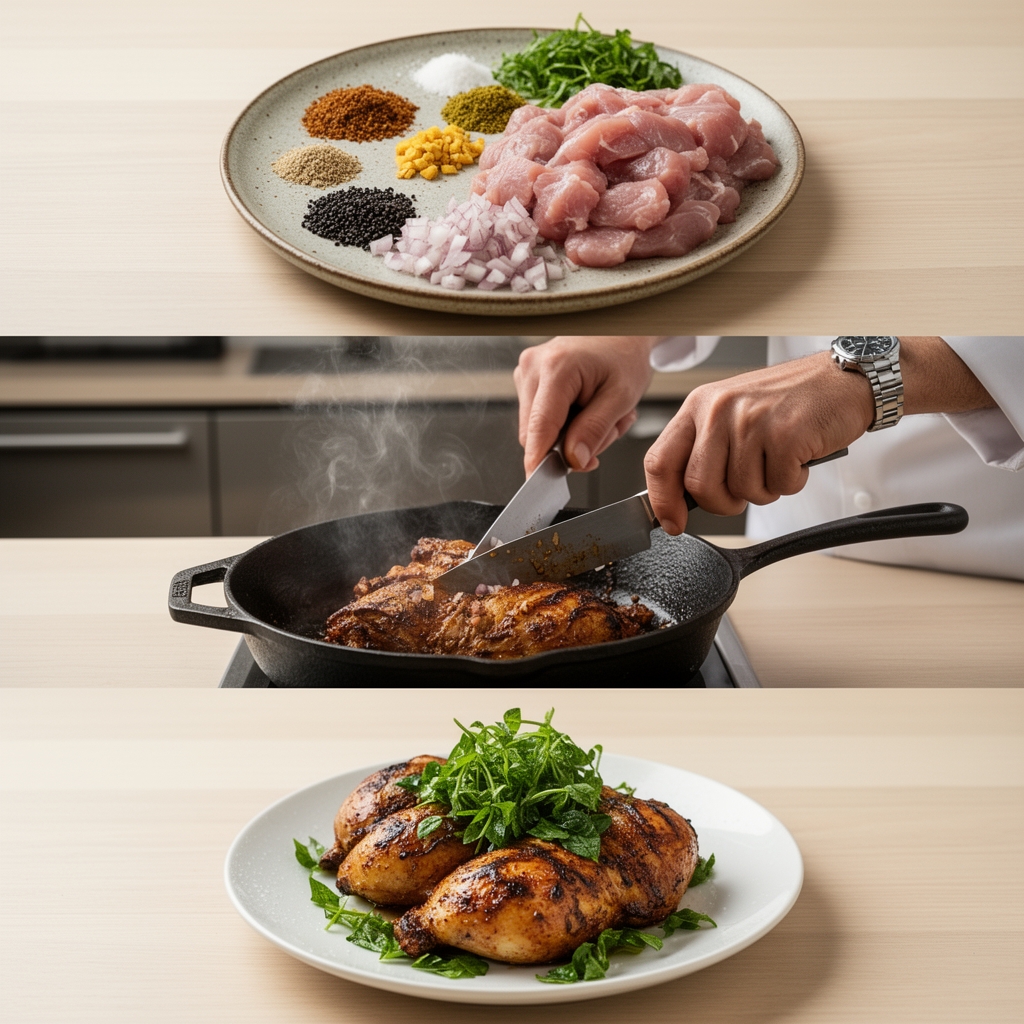
Add Dijon, soy sauce, fish sauce, honey, garlic, ginger, smoked paprika, salt, and pepper to the yogurt mixture. Drizzle in oil while whisking continuously to form a stable emulsion. Note the texture shown in the step-by-step photos: glossy, thick, and clingy.
Chef's Secret: Dijon contains mustard seed mucilage, a natural lecithin that binds water and oil phases. This keeps glutamate-rich soy and fish sauce from pooling.
Step 3: Score and Salt the Chicken
Using a sharp knife, make three diagonal slashes through the skin and into the meat (about 5mm deep) on each thigh. Rub kosher salt directly into the cuts and all over the meat surface.
Why it Works: Pre-salting for even 10 minutes initiates osmotic brine, pulling moisture out then reabsorbing it with dissolved proteins for better moisture retention. Slashes create channels for marinade penetration beyond the 3mm surface zone.
Step 4: Submerge and Agitate
Place chicken in a gallon zip-lock bag, pour marinade over, squeeze out air, and massage the bag for 45 seconds to coat every surface. Refrigerate flat on a sheet pan.
Chef's Secret: Air pockets create uneven contact. Flattening the bag maximizes surface area contact and ensures the marinade's enzymatic bromelain from any added pineapple juice (optional boost) works uniformly.
Step 5: The Sear Protocol
Heat your cast iron with 1 tablespoon neutral oil until it shimmers and just begins to smoke (205°C/400°F verified with an IR thermometer). Blot chicken dry, place skin-down without moving for 6 full minutes. You'll hear aggressive sizzling within 10 seconds.
Why it Works: The Maillard reaction requires surface temperatures above 140°C/285°F and low moisture. Blotting removes marinade sugars that would burn before the skin crisps. The long undisturbed sear renders subcutaneous fat and dehydrates the skin into a crackling shell.
Step 6: Flip and Oven Transition
Flip thighs, sear flesh side for 4 minutes, then transfer the entire skillet to a preheated 190°C/375°F oven. Roast for 8 minutes until a probe thermometer reads 74°C/165°F in the thickest part.
Chef's Secret: The oven provides gentle, ambient heat that cooks the interior without scorching the crust. Residual heat from the skillet continues the Maillard cascade on the underside.
Step 7: Rest and Carryover
Remove skillet, tent chicken loosely with foil, and rest for 5 minutes. Internal temperature will coast to 76-77°C/169-171°F.
Why it Works: Thermal carryover redistributes heat from the exterior to the cooler core, while myoglobin proteins relax and reabsorb expelled juices, increasing perceived moisture by up to 20%.
Step 8: Finish with Acid and Herb
Squeeze a wedge of fresh lemon over the rested chicken and scatter torn cilantro or parsley leaves.
Chef's Secret: A final acid hit post-cook brightens flavors dulled by heat and provides aromatic top notes the marinade cannot deliver after high-temperature cooking.
Nutritional Info
Per thigh (170g cooked weight): 290 kcal, 22g protein, 19g fat (6g saturated), 8g carbohydrate (5g from honey and yogurt sugars), 720mg sodium, 1g fiber. The yogurt contributes 180mg calcium and live probiotics (if not fully denatured by heat). High in niacin (B3) and selenium from the chicken, plus bioavailable iron enhanced by the vitamin C in lemon juice.
Dietary Swaps
Keto: Replace honey with erythritol or omit entirely (loses some Maillard browning). Use full-fat Greek yogurt to boost fat-to-carb ratio. Total carbs drop to 3g per serving.
Gluten-Free: Verify soy sauce is tamari or use coconut aminos. Most Dijon mustards are naturally gluten-free, but check labels.
Vegan: Substitute chicken with extra-firm tofu (pressed for 20 minutes, then sliced into 2cm slabs). Reduce marinade time to 15 minutes; tofu's porous structure absorbs faster. Use maple syrup for honey, and nutritional yeast for umami depth.
Serving & Presentation
Plating Idea 1: Shingle sliced thighs over jasmine rice cooked in chicken stock, drizzle pan juices, and garnish with thinly sliced scallions and toasted sesame seeds.
Plating Idea 2: Serve whole thighs atop a smear of whipped tahini, surround with roasted cherry tomatoes and charred broccolini, finish with a drizzle of chili crisp oil.
Plating Idea 3: Build a grain bowl with quinoa, pickled red onion, shredded cabbage, sliced avocado, and chicken torn into bite-sized pieces. Top with a lime-cilantro crema.
The Pro-Dodge
Pitfall 1: Marinating longer than 4 hours turns the surface mushy. Yogurt's lactic acid and any added protease enzymes over-tenderize, breaking down myosin too aggressively. Fix: For overnight marinades, omit yogurt and use only oil, aromatics, and a splash of vinegar.
Pitfall 2: Skipping the blotting step before searing creates steam, not crust. Excess marinade sugars also carbonize into bitter compounds. Fix: Pat each piece thoroughly with paper towels and let air-dry on a rack for 5 minutes if time allows.
Pitfall 3: Overcrowding the pan drops surface temperature below the Maillard threshold (140°C/285°F). Fix: Sear in batches, or use two skillets simultaneously to maintain aggressive heat.
The Meal Prep Corner
Storage: Refrigerate cooked chicken in an airtight container for up to 4 days. Store skin-side-up to prevent sogginess. For freezing, wrap individual thighs tightly in plastic, then foil, and freeze for up to 3 months.
Reheating: For day-one crispness, reheat in a 190°C/375°F oven on a wire rack set over a baking sheet for 12 minutes. Avoid microwaving; it steams the skin into rubber. Alternatively, re-crisp skin-side-down in a dry skillet over medium heat for 3 minutes, then warm through in a low oven.
Make-Ahead: Marinate chicken in the morning, refrigerate, then sear and roast just before dinner. The marinade itself can be prepped 2 days ahead and stored in the fridge; whisk before using to re-emulsify.
The Wrap-Up
These eight marinade boosts convert ordinary chicken into a canvas for complex, layered flavor that holds its own against any high-end bistro plate. Master the acid balance, respect the sear, and let the science of enzymatic tenderization and Maillard browning do the heavy lifting. Your kitchen, your rules, your perfectly crusted, juice-flooded triumph. Share your favorite marinade riff in the comments, tag your cook on social, and let's build a library of the best marinated chicken recipes this side of culinary school.
The Kitchen Table
Q: Can I use chicken breast instead of thighs?
A: Absolutely, but reduce cook time to 14 minutes total (5 minutes per side sear, 4 minutes oven) to avoid drying out the leaner meat. Brining the breast in 5% salt solution for 30 minutes before marinating adds insurance against toughness.
Q: What if I don't have a cast iron skillet?
A: Any heavy-bottomed, oven-safe pan works. Stainless steel is excellent for searing; just ensure it's fully preheated. Avoid nonstick above 230°C/450°F due to coating degradation.
Q: How do I know when the chicken is perfectly done without a thermometer?
A: Press the thickest part with your finger; it should feel firm with slight give, like the flesh at the base of your thumb when you touch your thumb to your ring finger. However, a probe thermometer is the gold standard for food safety and juiciness.
Q: Can I grill instead of pan-searing?
A: Yes. Preheat a clean grill to medium-high (190-205°C/375-400°F direct heat). Grill skin-down for 7 minutes, flip for 5 minutes, then move to indirect heat for 6 minutes. The same blotting and resting rules apply.
Q: Why does my marinade sometimes taste great raw but bland after cooking?
A: Volatile aromatics like raw garlic and fresh herbs dissipate under high heat. Always finish with fresh elements post-cook (lemon juice, herbs, flaky salt) to restore aromatic brightness and balance the deepened, caramelized flavors from the Maillard reaction.