
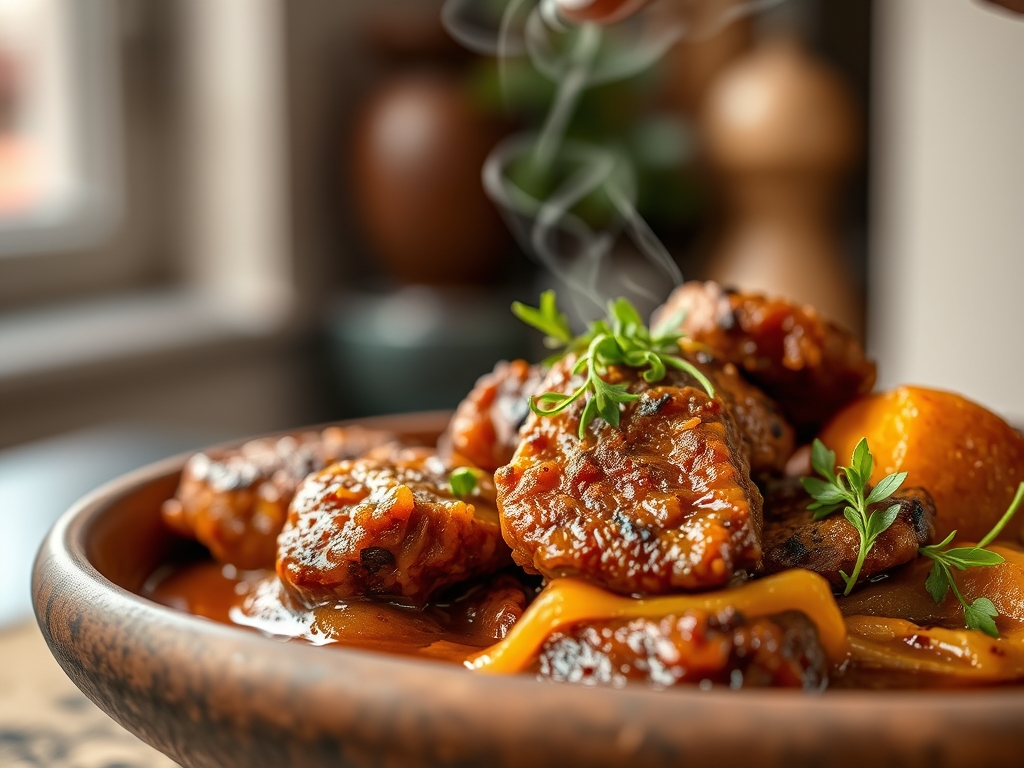
Picture this: the air in your kitchen thickens with the scent of toasted cumin and sweet cinnamon while the gentle hiss of a clay vessel hums on the stove. This is the magic of authentic tagine beef recipes. It is not just a stew; it is a slow-motion transformation where tough muscle fibers surrender to a viscous, spiced syrup. We are moving beyond basic braising into a world of complex flavor layering. If you have ever wondered why restaurant versions taste more soulful than your home attempts, it is because of the chemistry happening inside that conical lid. We are about to unlock the precise thermal mechanics and aromatic sequencing required to turn humble beef chuck into a masterpiece that melts on the tongue. Grab your apron; we are going deep into the science of Moroccan comfort.
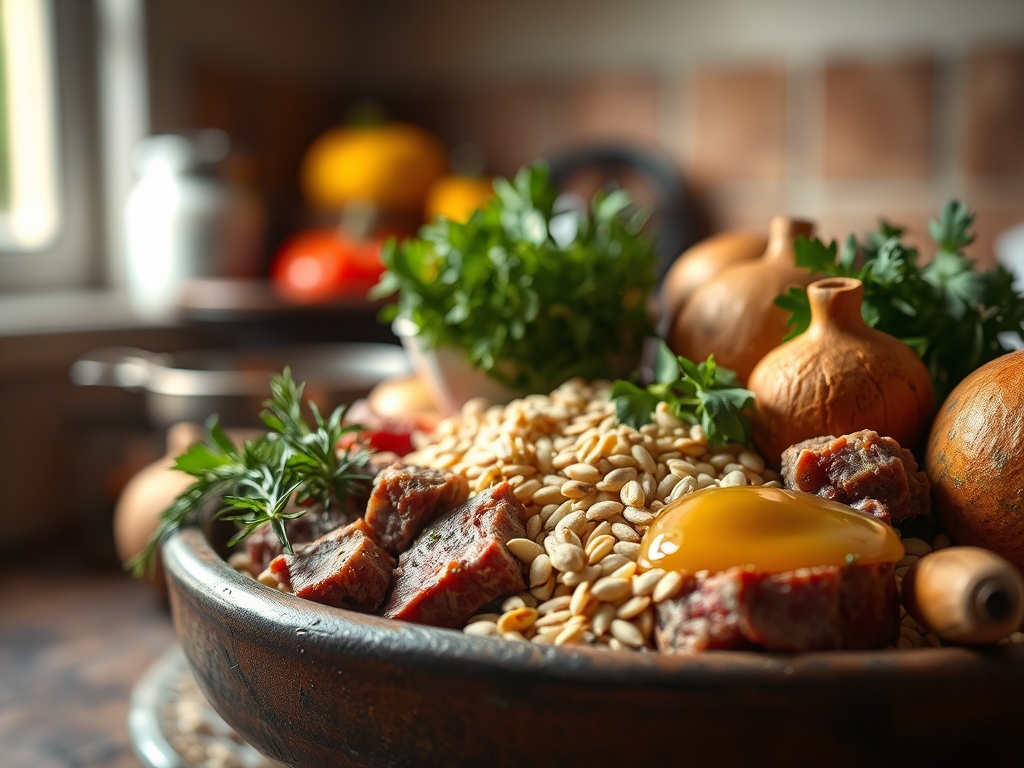
The Gathers:
To execute world-class tagine beef recipes, your mise-en-place must be surgical. Start with 2 pounds of beef shank or chuck roast. These cuts are rich in collagen, which will convert into silky gelatin during the long simmer. You will need a digital scale to measure out 2 teaspoons of ras el hanout; a complex blend that often contains over a dozen spices. Ensure you have fresh ginger and garlic ready for the microplane. The aromatic base requires two large yellow onions, finely diced to provide the necessary sugars for caramelization.
For the liquid gold, gather high-quality saffron threads and warm water to infuse the color. You will also need dried apricots or prunes to provide a piquant sweetness that balances the savory fat. Smart Substitutions: If you cannot find preserved lemons, use lemon zest mixed with a pinch of extra sea salt. If you lack a traditional clay tagine, a heavy-bottomed Dutch oven or a saucier with a tight-fitting lid will mimic the condensation cycle effectively.
The Clock
Efficiency in the kitchen is about the Chef's Flow. This process takes approximately 3.5 hours from start to finish. Your active prep time is 30 minutes; this involves trimming the silver skin from the beef with a sharp boning knife and dicing your aromatics. The "Searing Phase" takes 15 minutes, followed by a 2.5-hour "Quiet Braise." During the final 30 minutes, you will add the fruit and honey to allow the sauce to reduce and become viscous. Respecting this timeline ensures the connective tissue reaches its thermal breakdown point without overcooking the delicate fruit.
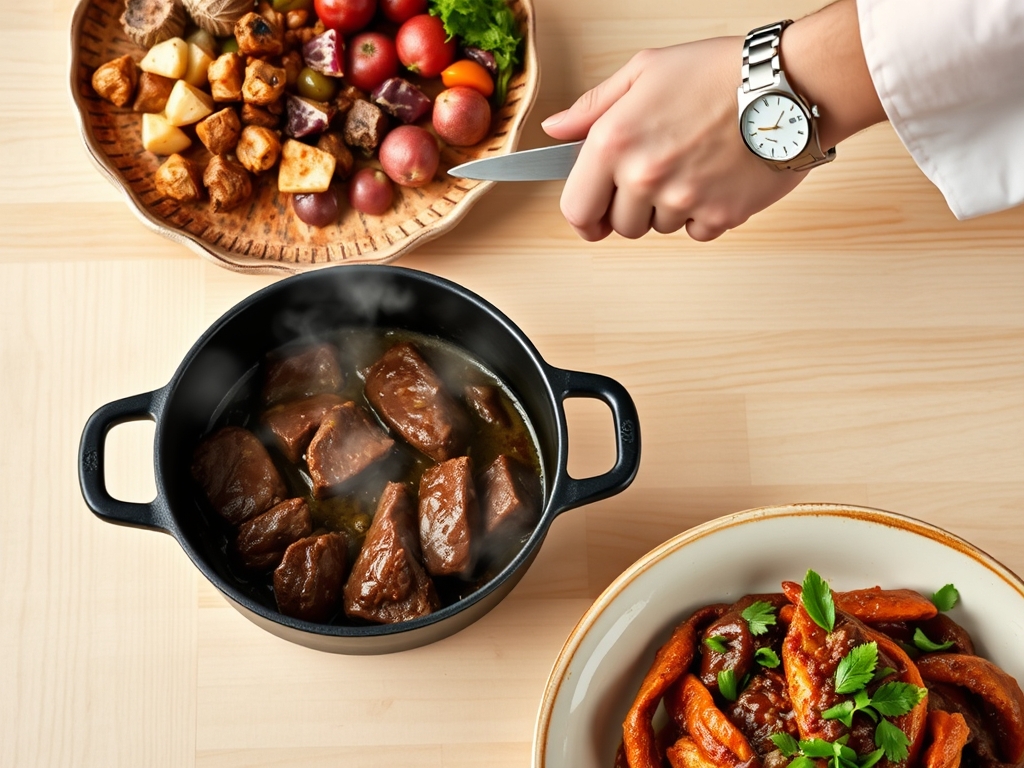
The Masterclass
1. The Maillard Sear
Pat your beef cubes dry with paper towels to remove surface moisture. Heat olive oil in a heavy-bottomed skillet until it reaches the shimmering point. Sear the beef in batches to avoid crowding the pan, which would lower the temperature and cause the meat to steam rather than brown. Use tongs to turn each piece until a deep crust forms.
Pro Tip: This is the Maillard reaction. By creating these brown pigments, you are developing hundreds of new flavor compounds that provide the "umami" backbone of the dish.
2. The Aromatic Sweat
Remove the beef and add your onions to the rendered fat. Use a bench scraper to clear your cutting board and slide in the garlic and ginger. Sauté until the onions are translucent and have picked up the fond from the bottom of the pan.
Pro Tip: Sweating the onions breaks down their cellular walls through enzymatic browning, releasing natural sugars that will eventually thicken your sauce without the need for flour.
3. Spicing the Fat
Add your ras el hanout, cinnamon, and ginger to the oil. Stir constantly for 60 seconds. You are looking for the spices to become fragrant but not burnt.
Pro Tip: Spices are fat-soluble. Toasting them in oil "blooms" the essential oils, ensuring the flavor is distributed evenly throughout the entire fat molecules of the dish.
4. The Deglaze and Infuse
Return the beef to the pot and pour in your saffron-infused water and beef stock. Use a wooden spoon to deglaze the bottom, scraping up every bit of caramelized protein.
Pro Tip: Deglazing captures the concentrated juices that have dried on the pan. This creates a more complex, layered broth through hydrolysis.
5. The Low and Slow Simmer
Cover the vessel with its conical lid. Reduce the heat to the lowest possible setting. The steam will rise, hit the cool lid, and drip back down onto the meat in a continuous cycle of self-basting.
Pro Tip: Maintaining a temperature between 180 and 190 degrees Fahrenheit is crucial. This is the sweet spot where collagen denatures into gelatin without toughening the muscle fibers.
6. The Fruit Addition
Thirty minutes before serving, add your dried apricots and honey. This late addition prevents the fruit from disintegrating into a mushy texture.
Pro Tip: The sugars in the fruit act as a humectant, drawing moisture into the sauce and creating that signature glossy sheen.
7. The Final Reduction
Remove the lid for the last 10 minutes if the sauce is too thin. You want a coating consistency that clings to the back of a spoon.
Pro Tip: Evaporation concentrates the solutes in the liquid, increasing the viscosity and intensifying the salt and spice profile.
The Deep Dive
Macro Nutrition: A standard serving of beef tagine provides roughly 450 calories, 35g of protein, and 18g of healthy fats. It is high in iron and zinc due to the slow-cooked beef.
Dietary Swaps: For a Vegan version, swap beef for extra-firm tofu or chickpeas and use vegetable stock. For Keto, omit the dried fruit and honey, replacing them with a splash of apple cider vinegar and extra olives. This recipe is naturally Gluten-Free as long as your spice blend contains no fillers.
The Fix-It:
- Too Salty: Add a peeled potato for the last 20 minutes; it acts as a sponge for excess sodium.
- Too Thin: Whisk a teaspoon of cornstarch with cold water and stir it in, or simply simmer uncovered to reduce.
- Tough Meat: Usually means it hasn't cooked long enough. Add a splash of water and give it another 30 minutes of heat.
Meal Prep: Tagine actually tastes better on day two. The flavors continue to marry as the dish cools. When reheating, do so gently on the stovetop with a splash of water to loosen the gelatinized sauce. Avoid the microwave, which can cause the beef to become "rubbery" due to uneven molecular agitation.
The Wrap-Up
Mastering tagine beef recipes is about patience and precision. You have moved from being a casual cook to a culinary scientist who understands how heat, fat, and aromatics interact. Whether you are serving this at a festive dinner party or a cozy Sunday night meal, the depth of flavor you have created is a testament to the slow-cooking process. Don't forget to serve it with plenty of crusty bread or fluffy couscous to soak up every drop of that liquid gold. You have officially conquered the Moroccan kitchen!
The Kitchen Table
What is the best cut of meat for beef tagine?
Beef shank or chuck roast are ideal. These cuts contain high amounts of connective tissue that transform into silky gelatin during the slow-cooking process, resulting in incredibly tender meat that falls apart with a fork.
Can I make this in a slow cooker?
Yes, you can. Sear the beef and aromatics in a skillet first to develop flavor through the Maillard reaction. Transfer everything to the slow cooker and cook on low for 6 to 8 hours for the best results.
Why is my tagine sauce too watery?
This usually happens if the onions didn't break down enough or the lid was too tight. Remove the lid during the last 20 minutes of cooking to allow the liquid to evaporate and the flavors to concentrate into a thick glaze.
What can I use if I don't have ras el hanout?
You can create a quick substitute by mixing equal parts ground cumin, ginger, coriander, and cinnamon. Add a pinch of ground cloves and allspice to mimic the complex, warm floral notes found in the traditional Moroccan spice blend.