
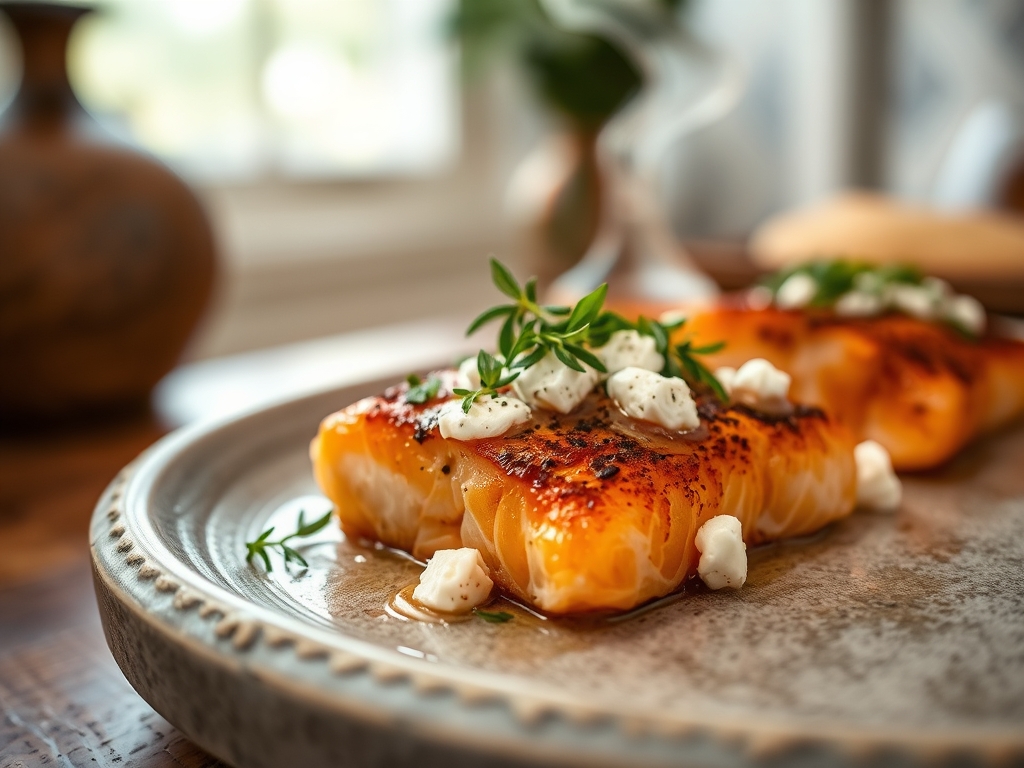
Imagine a heavy-bottomed skillet sizzling as a cold fillet of King salmon hits shimmering olive oil. The sound is a sharp, percussive crackle that signals the start of the Maillard reaction. Now, picture crumbling a block of piquant, briny sheep's milk cheese over that golden crust. These feta salmon recipes are more than just dinner; they are a masterclass in contrasting textures and pH balancing. The rich, fatty acids of the fish meet the acidic, salty punch of the curd to create a profile that is both decadent and bright. It is the culinary equivalent of a perfectly tailored blazer; sophisticated, structured, and timeless.
We are moving beyond the basic bake. We are talking about emulsified feta creams, herb-crusted medallions, and Mediterranean-inspired pan sauces that deglaze the soul. Whether you are aiming for a crispy skin that shatters like glass or a slow-poached texture that melts like butter, the addition of feta provides the necessary lactic acid to cut through the salmon's natural oils. It is a scientific match made in gastronomic heaven. Grab your apron and your favorite microplane; we are about to transform your kitchen into a high-end bistro.
The Gathers:
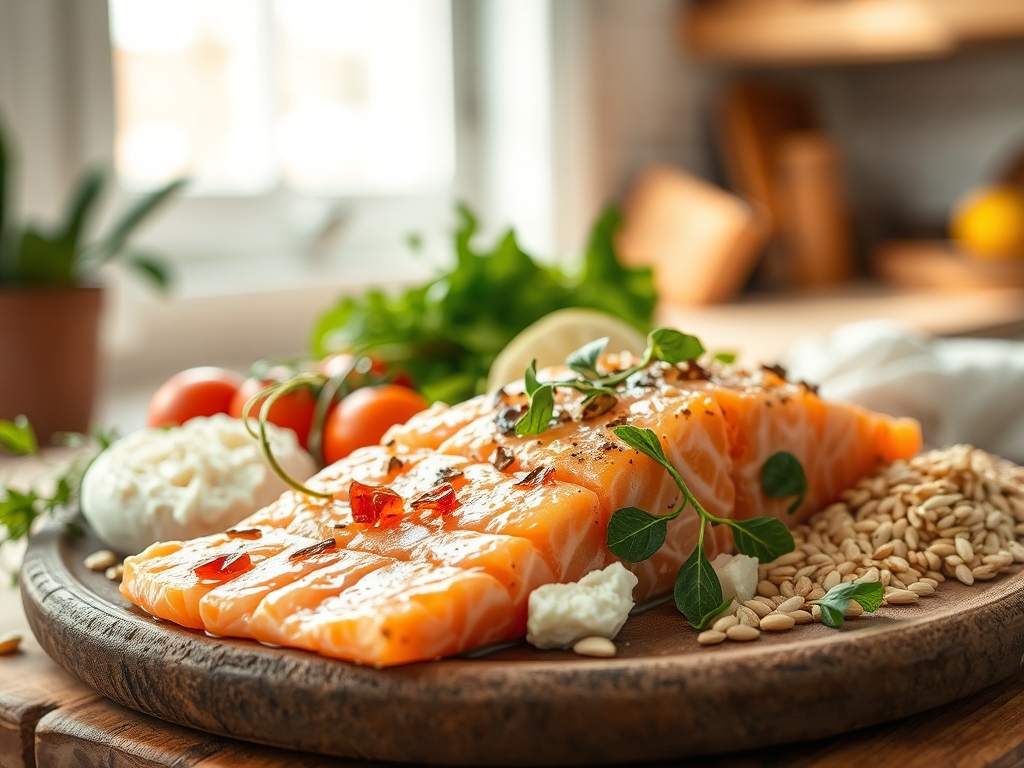
To execute these feta salmon recipes with precision, your mise-en-place must be immaculate. Start with the protein. You want center-cut fillets, ideally weighing 170 grams each. Use a digital scale to ensure uniform cooking times. The salmon should be vibrant, firm to the touch, and smell of nothing but a clean ocean breeze.
Next, the feta. Avoid the pre-crumbled tubs. Those are coated in potato starch or cellulose to prevent clumping, which inhibits the cheese from melting into a silky, viscous sauce. Buy the block in brine. It retains its moisture and offers a sharper, more complex flavor profile. You will also need aromatics: fresh dill, flat-leaf parsley, and garlic cloves that we will crush with a bench scraper to release their essential oils.
For the liquids, keep a bottle of dry white wine or a bright lemon juice nearby to deglaze your pan. The acidity is crucial for lifting the fond, those browned bits of protein stuck to the bottom of your skillet, into your sauce.
Smart Substitutions:
If you find feta too aggressive, swap it for a mild goat cheese or a salted ricotta salata. For the salmon, Arctic Char is a brilliant alternative; it shares the same fatty richness but offers a slightly more delicate flake. If you are avoiding dairy entirely, a fermented cashew-based "feta" provides a similar lactic tang and creamy mouthfeel without the lactose.
The Clock
Efficiency in the kitchen is about the "Chef's Flow." This is the art of overlapping tasks so that no heat is wasted. For these recipes, prep time sits at a crisp 15 minutes. This includes your knife work and bringing the fish to room temperature. Cooking time varies between 8 and 12 minutes depending on the thickness of the fillet.
Total time from fridge to table is roughly 30 minutes. The flow works like this: while the salmon tempers on the counter, you prep your aromatics. While the skillet preheats, you crumble your cheese. By the time the fish is resting, your sauce is emulsifying in the residual heat. This prevents the "panic scramble" and ensures every component is served at its thermal peak.
The Masterclass
1. Temper and Pat Dry
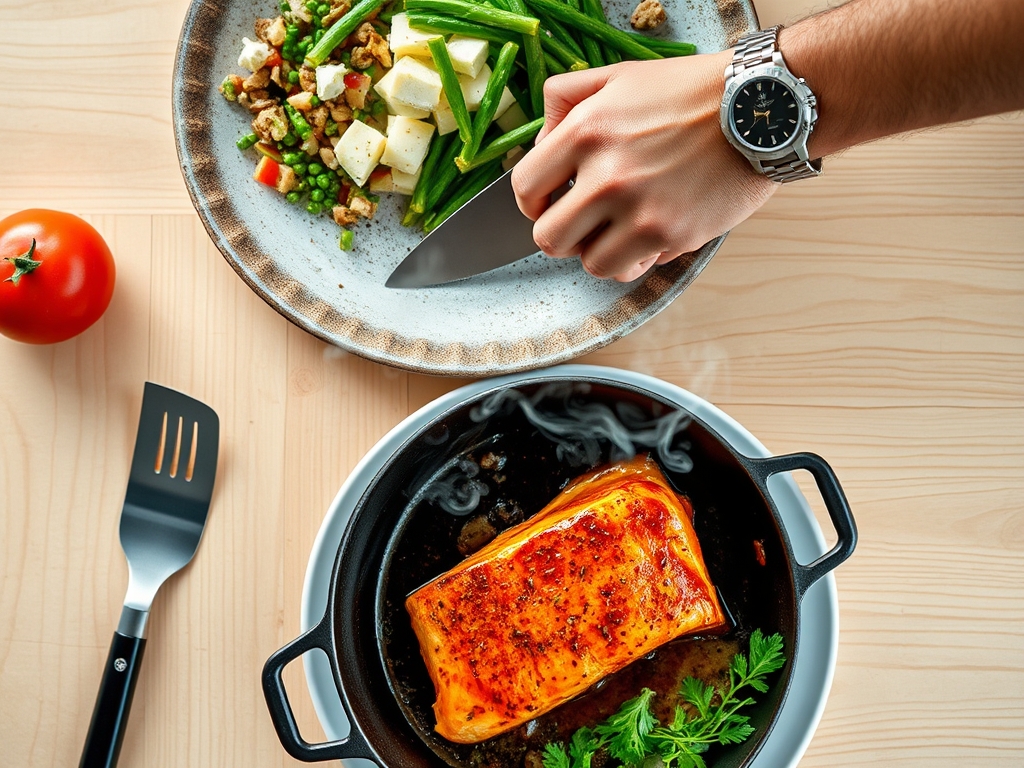
Remove your salmon from the refrigerator 20 minutes before cooking. Use a lint-free paper towel to aggressively pat the skin side dry. Moisture is the enemy of the Maillard reaction; any surface water will turn to steam, resulting in a rubbery texture rather than a crisp one.
Pro Tip: This is known as surface dehydration. By removing moisture, you allow the surface temperature to rise rapidly above 285 degrees Fahrenheit, triggering the chemical reaction between amino acids and reducing sugars that creates savory depth.
2. The Sear
Heat a heavy-bottomed skillet over medium-high heat until the oil shimmers but does not smoke. Place the salmon skin-side down. Use a flexible fish spatula to press the fillet down firmly for the first 30 seconds. This prevents the protein fibers from curling, ensuring maximum surface contact.
Pro Tip: This technique prevents the "cupping" effect. By applying even pressure, you ensure the heat conducts uniformly across the skin, rendering the subcutaneous fat into a delicious, crispy layer.
3. The Feta Infusion
Once the salmon is flipped and nearly cooked through, reduce the heat. Add your crumbled feta and a splash of liquid, such as lemon juice or chicken stock. Use a saucier or a small whisk to gently agitate the cheese into the liquid as it melts.
Pro Tip: This is a form of pan-emulsification. The proteins in the feta act as stabilizers, binding the fat from the salmon and the added liquid into a cohesive, velvety sauce that coats the back of a spoon.
4. Aerate with Fresh Herbs
Just before serving, toss in your chopped herbs. Do not cook them; simply fold them into the warm sauce. This preserves the volatile compounds that give herbs their bright, grassy aroma.
Pro Tip: Heat degrades chlorophyll and essential oils. By adding herbs at the end, you utilize the residual heat to "bloom" the aromatics without destroying their delicate molecular structure.
5. The Rest
Transfer the salmon to a warm plate and let it rest for 3 to 5 minutes. This allows the internal juices, which have been pushed to the center by the heat, to redistribute throughout the fillet.
Pro Tip: This accounts for thermal carryover. The internal temperature of the fish will continue to rise by 5 to 10 degrees after being removed from the heat. Resting ensures a moist, tender flake every time.
6. The Final Deglaze
If there is any feta and herb mixture left in the pan, hit it with a final squeeze of lemon and a knob of cold butter. Whisk vigorously to create a mounting sauce, known in French cooking as monter au beurre.
Pro Tip: The cold butter creates a stable emulsion with the warm pan juices, resulting in a glossy finish and a rich, rounded flavor that balances the piquant feta.
The Deep Dive
From a macro perspective, feta salmon recipes are a powerhouse. You are looking at roughly 35 grams of high-quality protein and a significant dose of Omega-3 fatty acids. Feta adds calcium and B12, though you should be mindful of the sodium content.
Dietary Swaps:
For Keto enthusiasts, this recipe is naturally low-carb. Serve it over sautéed spinach or zoodles. For a Gluten-Free version, ensure your chicken stock or any thickeners used are certified GF. Vegans can replicate the experience using a firm tofu "steak" marinated in seaweed brine and topped with almond-based feta.
The Fix-It:
- White Gunk (Albumin): If you see white clouds seeping out of the salmon, you are overcooking it. The muscle fibers are contracting too hard and squeezing out the protein. Fix: Pull the fish off the heat 5 degrees earlier.
- Soggy Skin: Your pan wasn't hot enough or you didn't dry the skin. Fix: Use a blowtorch to crisp the skin post-cook or ensure the oil is shimmering before the fish hits the pan.
- Broken Sauce: If your feta sauce looks oily and separated, it got too hot. Fix: Add a teaspoon of heavy cream or water and whisk vigorously off the heat to re-emulsify.
Meal Prep:
To reheat without turning the salmon into cardboard, avoid the microwave. Use a low oven (275 degrees) with a splash of water in the dish, covered tightly with foil. This creates a gentle steam environment that rehydrates the protein.
The Wrap-Up
Mastering feta salmon recipes is a gateway to culinary confidence. It teaches you the balance of fat, acid, and salt while honing your searing techniques. The result is a dish that looks like it belongs on a glossy magazine cover but feels like a warm hug from a friend. Don't be afraid to experiment with different herbs or a pinch of chili flakes for heat. Your kitchen is your laboratory; make it delicious.
The Kitchen Table
Can I use frozen salmon for these recipes?
Yes, but thaw it completely in the refrigerator first. Pat it extremely dry with paper towels to remove excess moisture, which prevents a proper sear. Frozen salmon often releases more albumin, so cook it gently.
Why does my feta not melt smoothly?
Feta is a high-acid cheese with a stable protein structure, so it softens rather than melts like mozzarella. For a smoother texture, whisk it with a splash of warm pasta water or cream in a separate bowl first.
What is the best way to store leftovers?
Store in an airtight glass container for up to two days. Keep the sauce and fish together to maintain moisture. Avoid freezing cooked salmon, as the cell walls rupture, leading to a mushy texture upon thawing.
Is wild salmon better than farmed for this?
Wild salmon is leaner and has a more robust flavor, while farmed is fattier and milder. Both work beautifully. If using wild, reduce cooking time slightly as it can dry out faster due to lower fat content.